Techniques › Baking and pastry
Kneading
Beginner Baking and pastry
Kneading is working dough by hand or machine until smooth and stretchy.
Written with AI help from the sources listed, and published by Cory. Spot a mistake? Tell us and we'll fix it.
How do you do it?
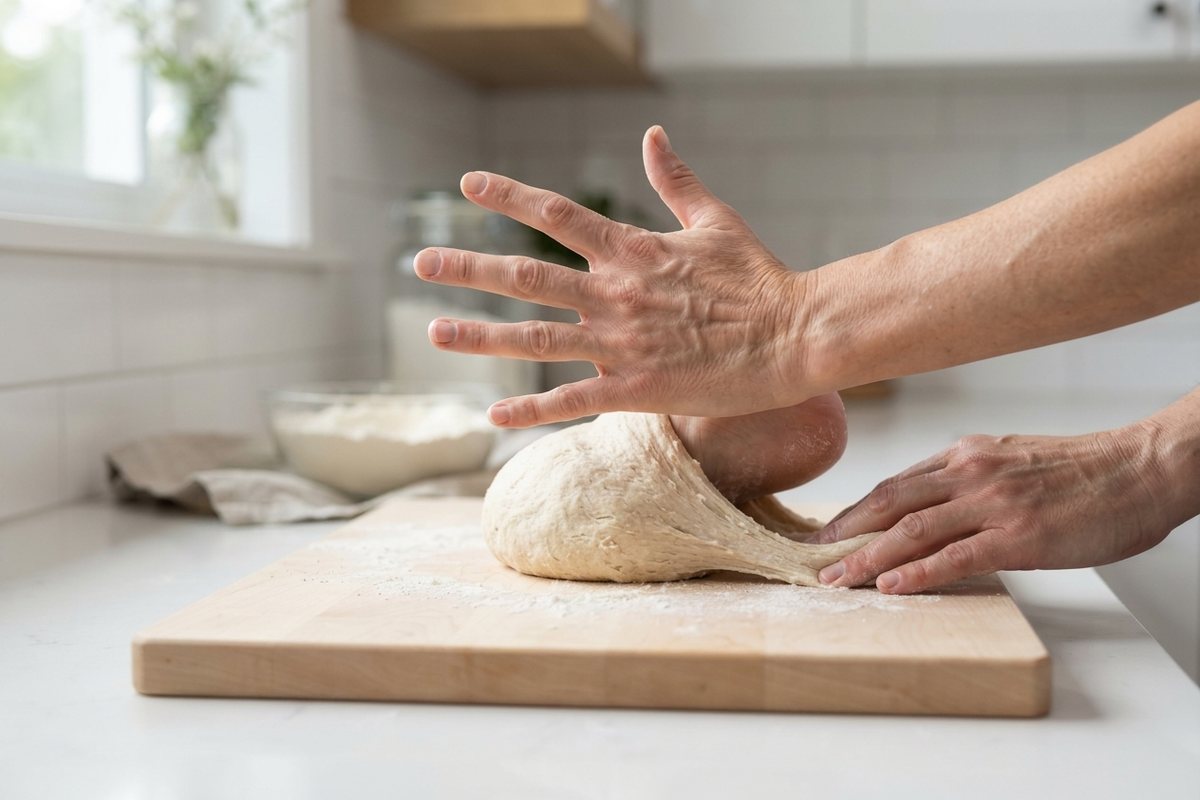
1Push the dough away with the heel of your hand, fold it back, turn it a quarter, repeat — about 8–10 minutes.
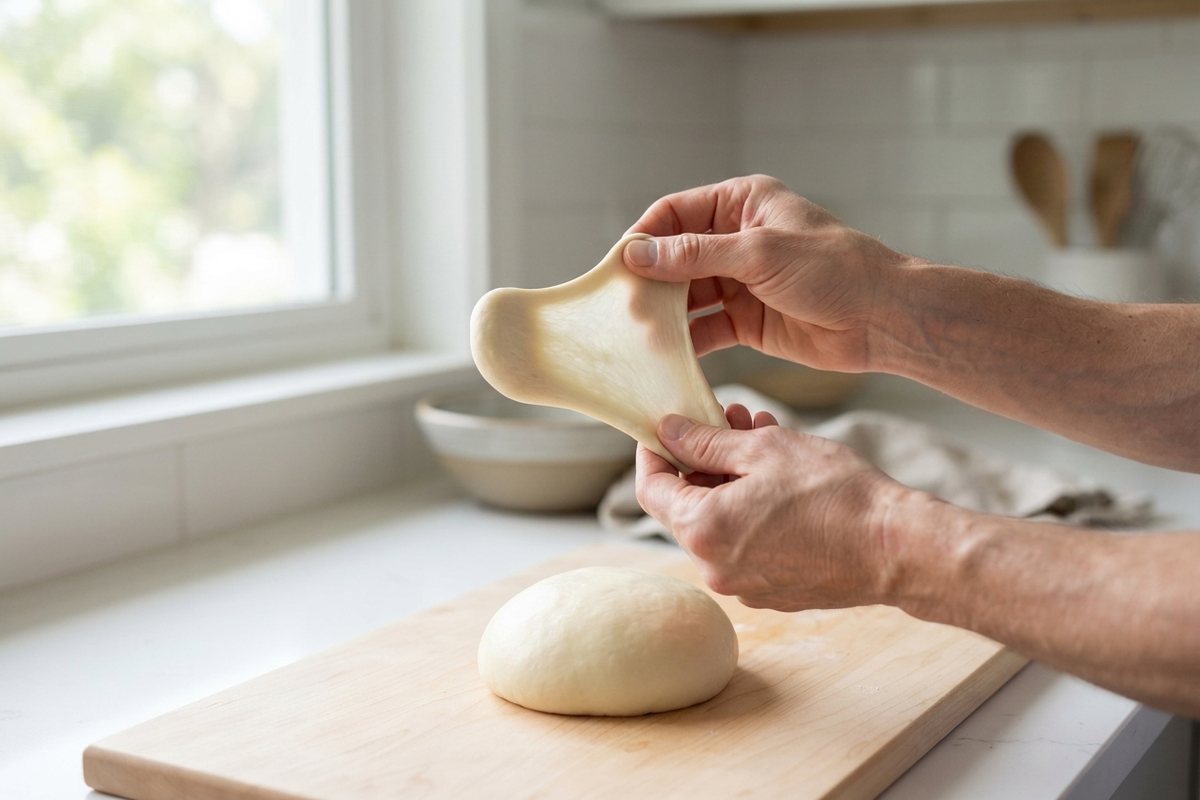
2It's ready when it's smooth and springs back, and a small piece stretches thin without tearing (the windowpane test).
Why does it work?
Kneading lines up and strengthens gluten, the stretchy network that traps gas and lets bread rise.
What are the common mistakes?
- Adding lots of extra flour — dry, heavy bread.
- Stopping early — bread stays dense.
Still stuck? Watch someone do it on YouTube.
Learn by cooking. In Pantry to Pan, technique words in your recipes' steps link straight
to guides like this one, right when you need them.
Try it free for 14 daysMore baking and pastry
- FoldingMixing something light (whipped cream, beaten egg whites) into something heavier without knocking the air out.Intermediate
- Creaming butter and sugarBeating soft butter with sugar until pale and fluffy — the start of most cakes and cookies.Beginner
- Proofing (letting dough rise)Letting yeast dough rest and rise before baking.Beginner
- Cutting in butterWorking cold butter into flour until it's in small lumps — pie crust, biscuits, scones.Intermediate
- Blind bakingBaking a pie crust before it's filled.Intermediate
- ScoringCutting shallow slashes into the surface of bread dough, meat fat or fish skin.Intermediate