Techniques › Heat and cooking methods
Searing
Beginner Heat and cooking methods
Searing is browning the surface of meat or fish in a very hot pan for flavor.
Written with AI help from the sources listed, and published by Cory. Sources: USDA safe minimum internal temperatures, USDA on the danger zone (40-140°F). Spot a mistake? Tell us and we'll fix it.
How do you do it?
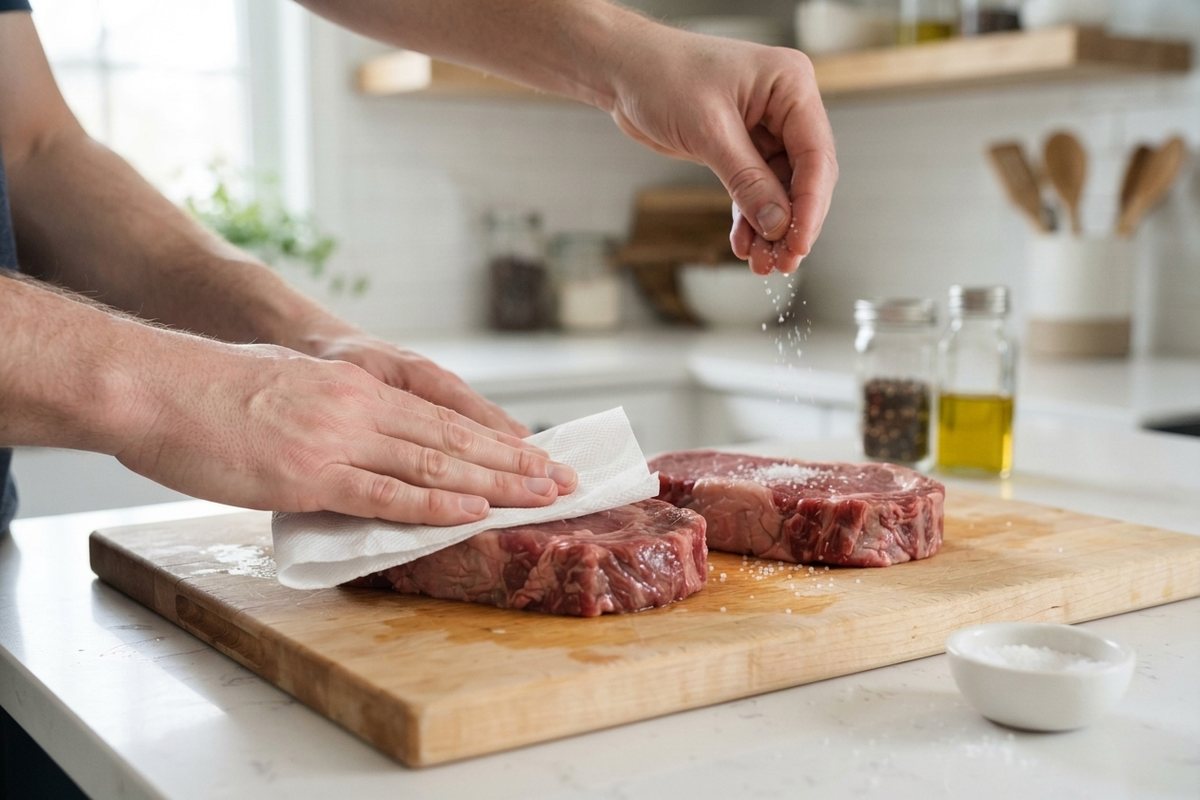
1Pat the food very dry and season it.
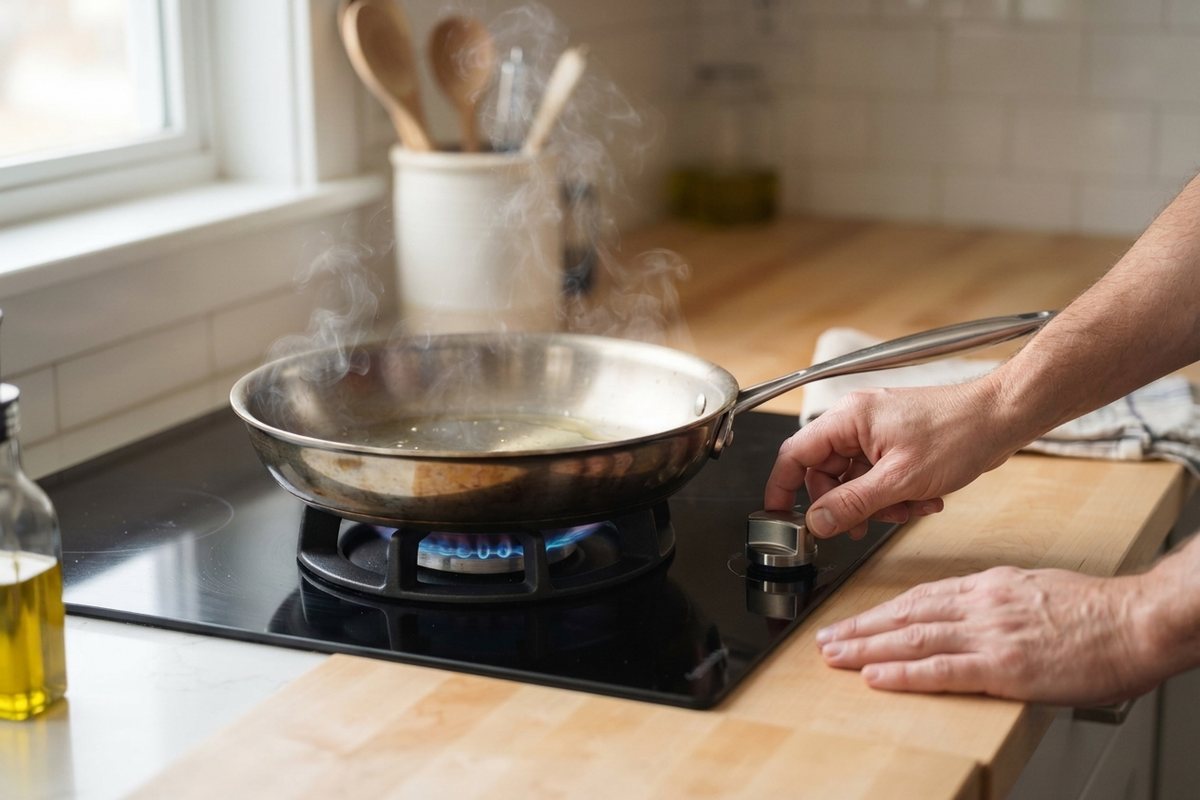
2Heat the pan with a little oil until it shimmers.
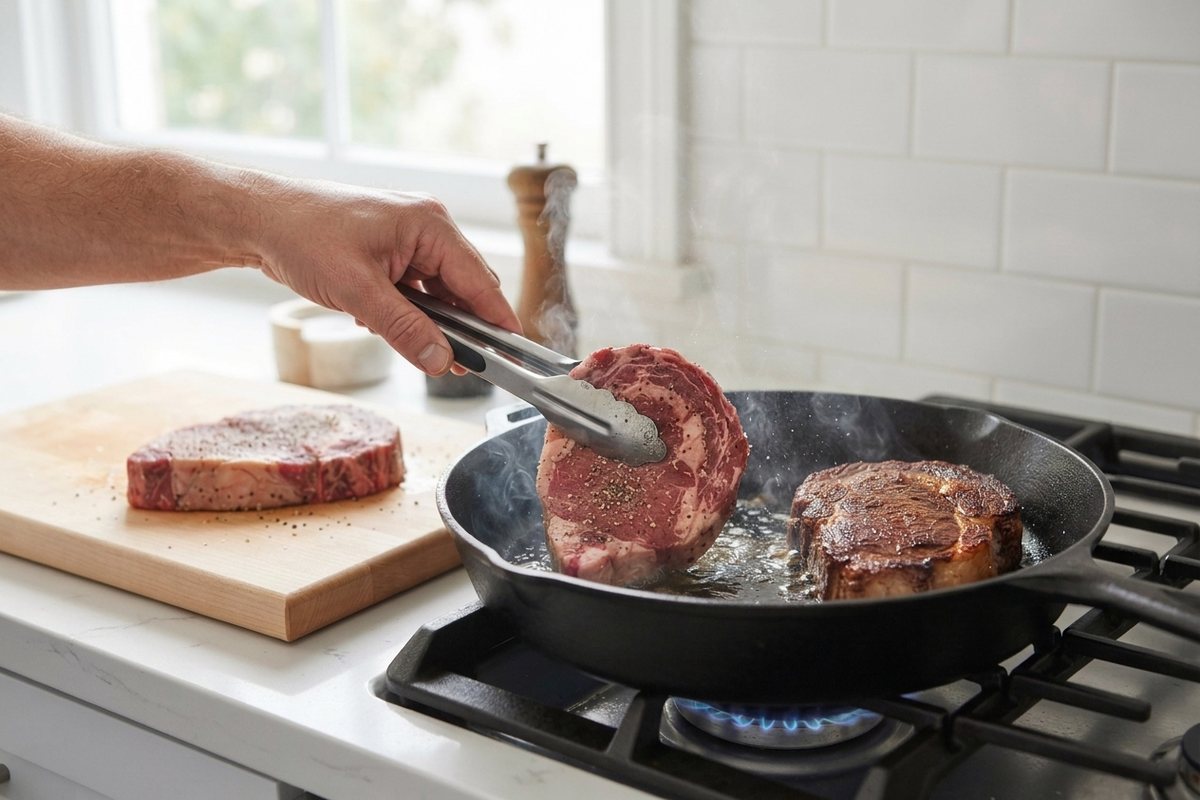
3Lay the food in, away from you, and leave it alone until it releases easily and is deep brown.
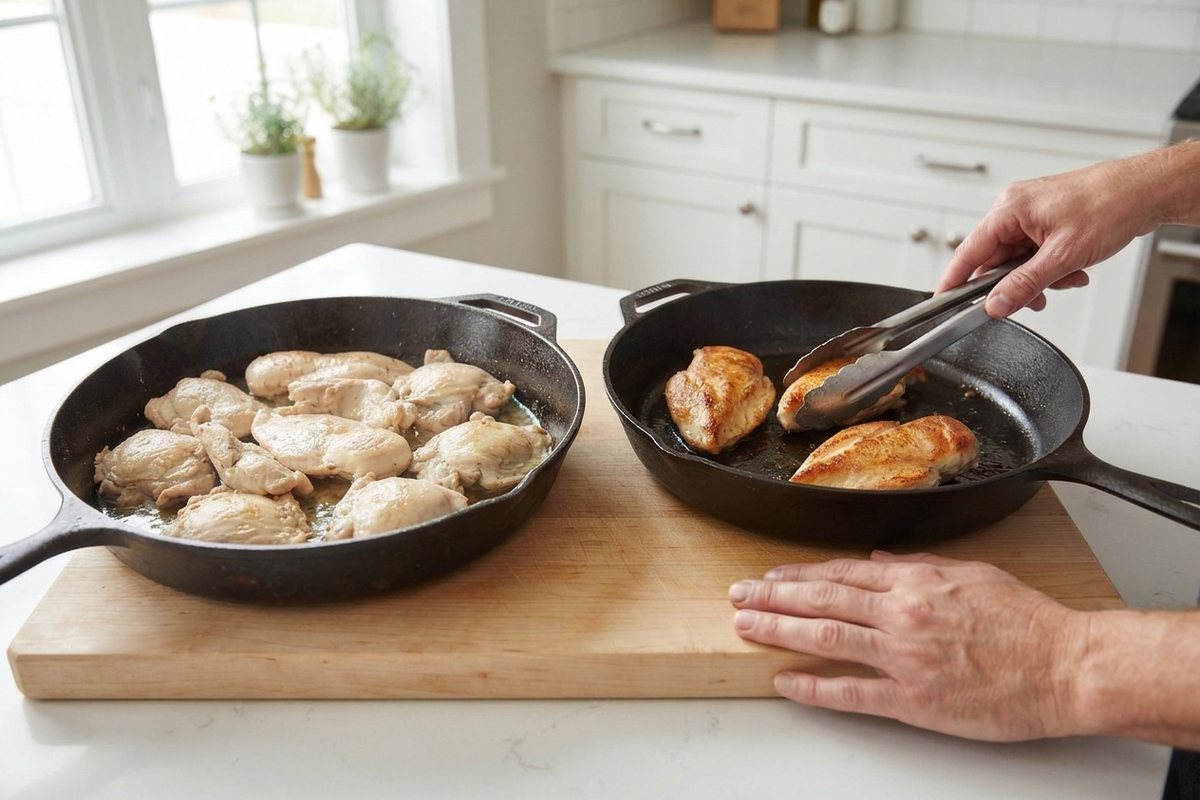
4Don't crowd the pan — cook in batches.
Why does it work?
Above about 300°F, proteins and sugars react (the Maillard reaction) and make hundreds of new flavors. Water keeps the surface at 212°F, which is why dry food and a hot, uncrowded pan matter. Searing doesn't 'seal in juices' — it adds flavor.
What are the common mistakes?
- Wet food or a crowded pan — it steams and turns grey.
- Moving it too soon — it sticks and tears.
Still stuck? Watch someone do it on YouTube.
More heat and cooking methods
- BraisingBrowning food, then cooking it slowly, partly covered in liquid, in a covered pot.Intermediate
- SautéingCooking pieces quickly in a little fat over medium-high heat, moving them often.Beginner
- SweatingCooking onions and other aromatics gently so they soften without browning.Beginner
- PoachingCooking gently in liquid kept just below a simmer (about 160–180°F).Intermediate
- Simmer vs. boilA simmer has small bubbles gently breaking the surface; a boil is big, constant, rolling bubbles.Beginner
- CharringCooking until the surface blackens in spots — peppers, corn, lemons, onions.Beginner