Techniques › Butchery and seafood
Trimming silverskin and fat
Beginner Butchery and seafood
Trimming silverskin and fat is removing the thin, shiny sheet of connective tissue and excess hard fat from cuts like tenderloin, ribs and roasts.
Written with AI help from the sources listed, and published by Cory. Sources: USDA safe minimum internal temperatures, USDA on the danger zone (40-140°F). Spot a mistake? Tell us and we'll fix it.
How do you do it?
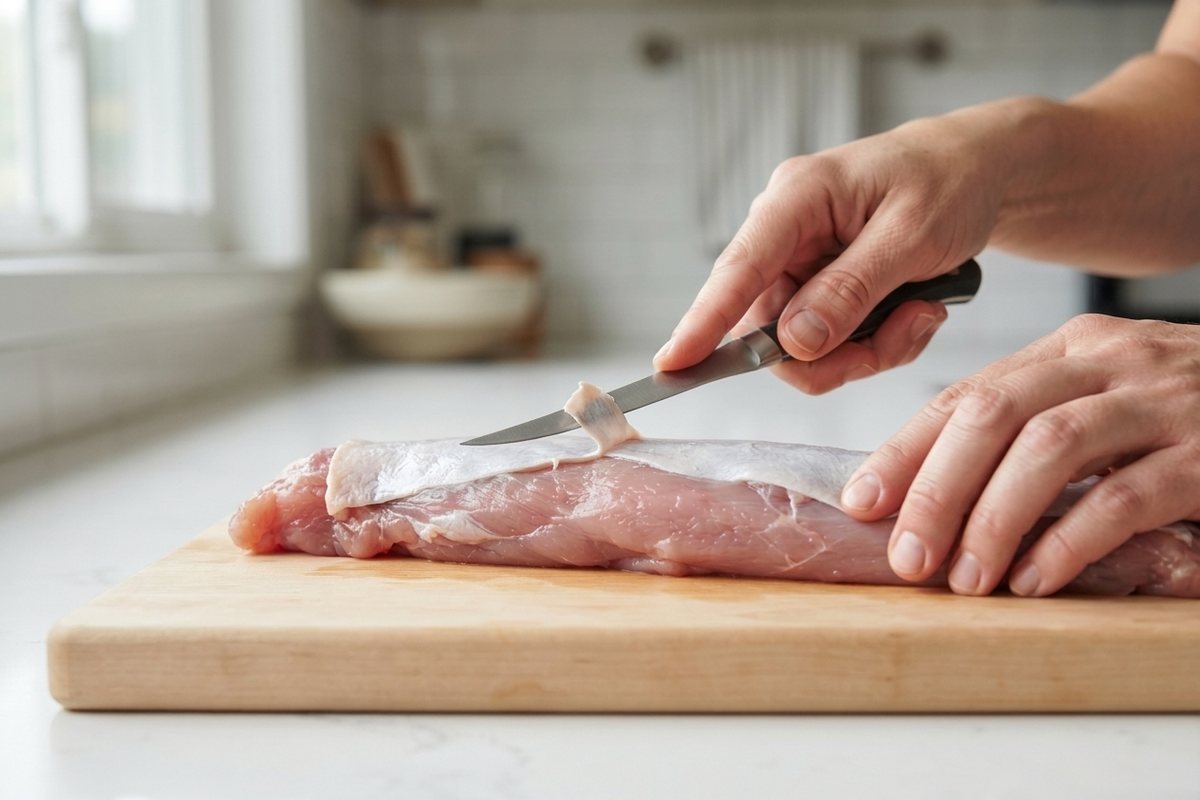
1Use a thin, flexible boning knife. Slide the tip under one end of the silverskin to make a tab about 1 inch wide.
2Grip the tab with your free hand, held flat and behind the blade.
3Angle the blade slightly up toward the silverskin and slide it along while gently pulling the tab back, so you shave the membrane, not the meat.
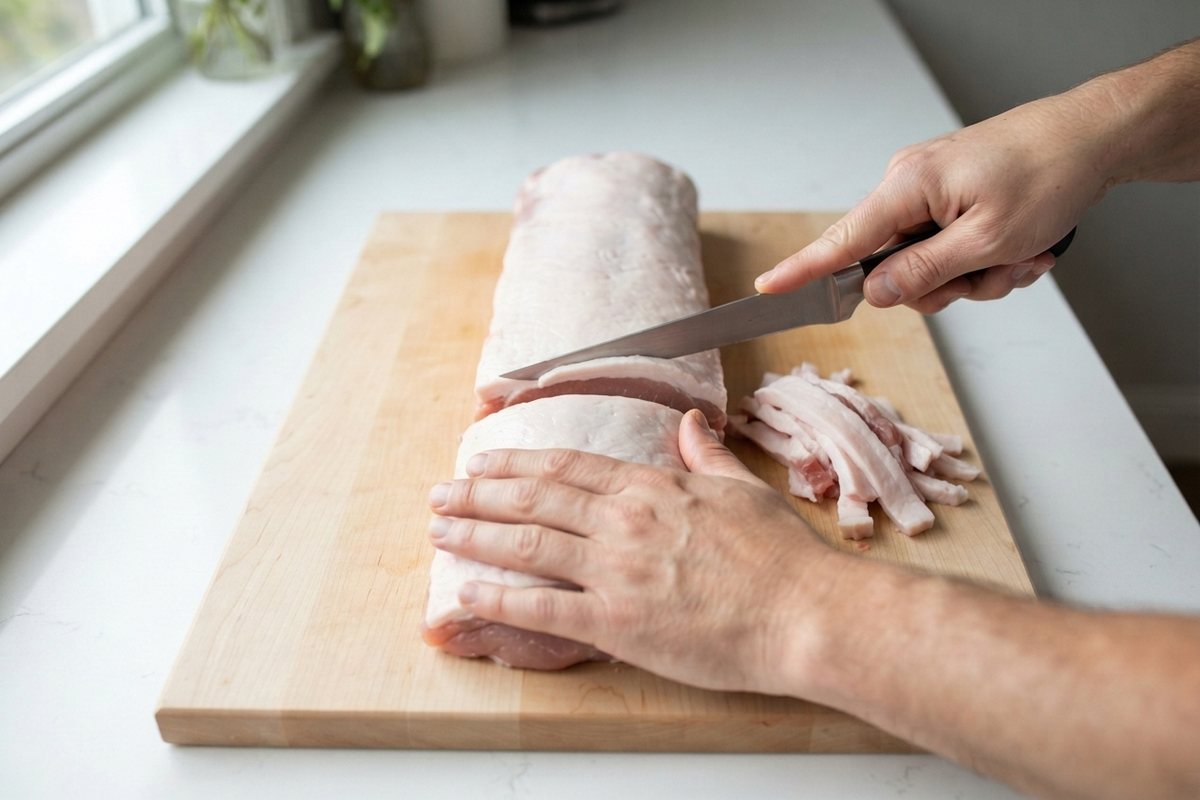
4Trim fat thicker than about 1/4 inch on quick-cooking cuts; leave a thin layer for flavor.
Why does it work?
Silverskin is mostly elastin, a stretchy protein that, unlike collagen, does not melt into gelatin no matter how long you cook it. As it heats it shrinks, so it curls the meat out of shape and stays chewy. Thick hard fat on a fast-cooked cut doesn't have time to render, so it stays rubbery.
What are the common mistakes?
- Angling the blade into the meat — you carve off good meat with the membrane.
- Trimming all fat — leaner, drier, less flavorful results.
- Using a dull knife — it slides off the membrane and skips toward your hand.
Still stuck? Watch someone do it on YouTube.
More butchery and seafood
- Breaking down a whole chickenCutting a raw whole chicken into legs, wings and breasts by working through its joints instead of its bones.Intermediate
- Deboning chicken thighsRemoving the single bone from a chicken thigh so it lies flat and cooks quickly and evenly.Intermediate
- Frenching a rack of lamb or porkScraping the ends of rib bones clean of meat, fat and membrane so the rack looks neat and carves easily.Advanced
- Tying a roastWrapping a boneless roast with kitchen twine at even intervals so it holds a tight, even shape while it cooks.Intermediate
- Cutting steaks from a larger pieceSlicing a whole strip loin, ribeye roast or tenderloin into individual steaks of the thickness you want.Intermediate
- Trimming a brisketShaping a whole packer brisket by removing hard fat and thin edges before smoking or slow-roasting.Advanced