Techniques › Baking and pastry
Telling when baked goods are done
Beginner Baking and pastry
Telling when baked goods are done is using sight, touch, a toothpick or a thermometer to know when a cake, bread or cookie is fully baked.
Written with AI help from the sources listed, and published by Cory. Spot a mistake? Tell us and we'll fix it.
How do you do it?
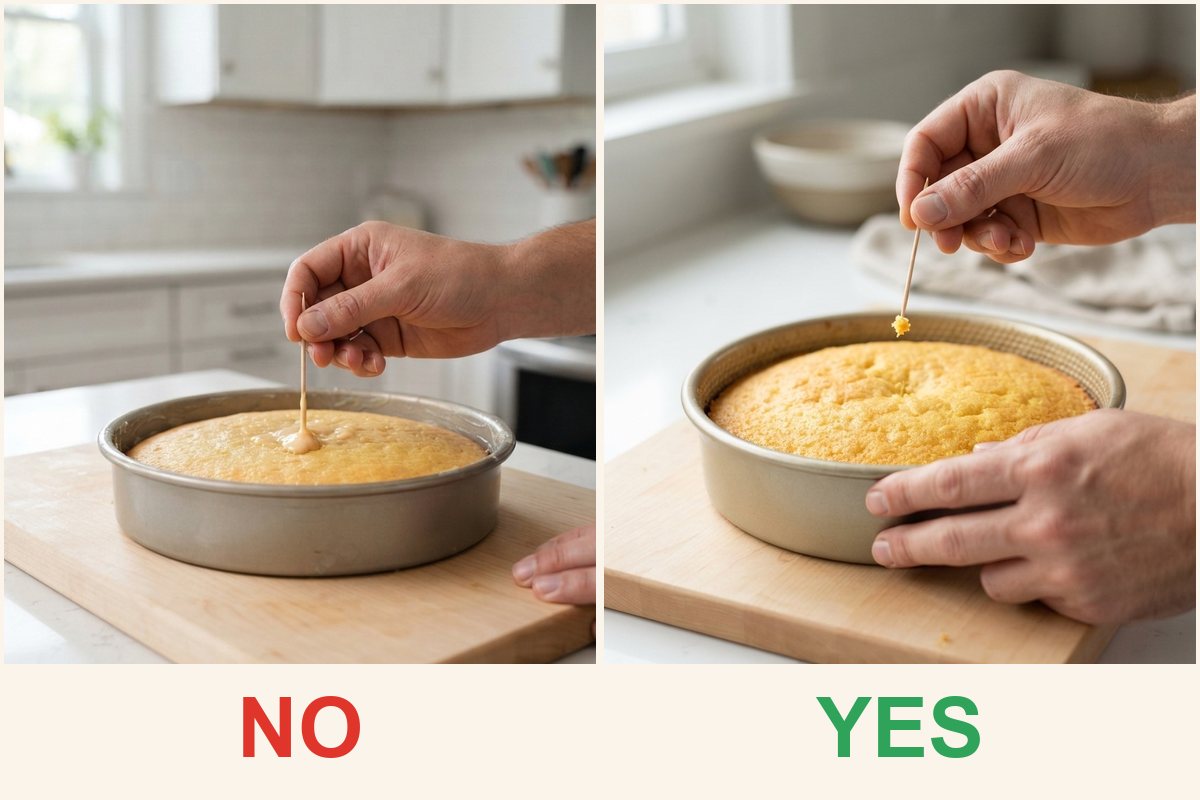
1Cakes: a toothpick in the center comes out clean or with a few moist crumbs, and the top springs back when pressed.
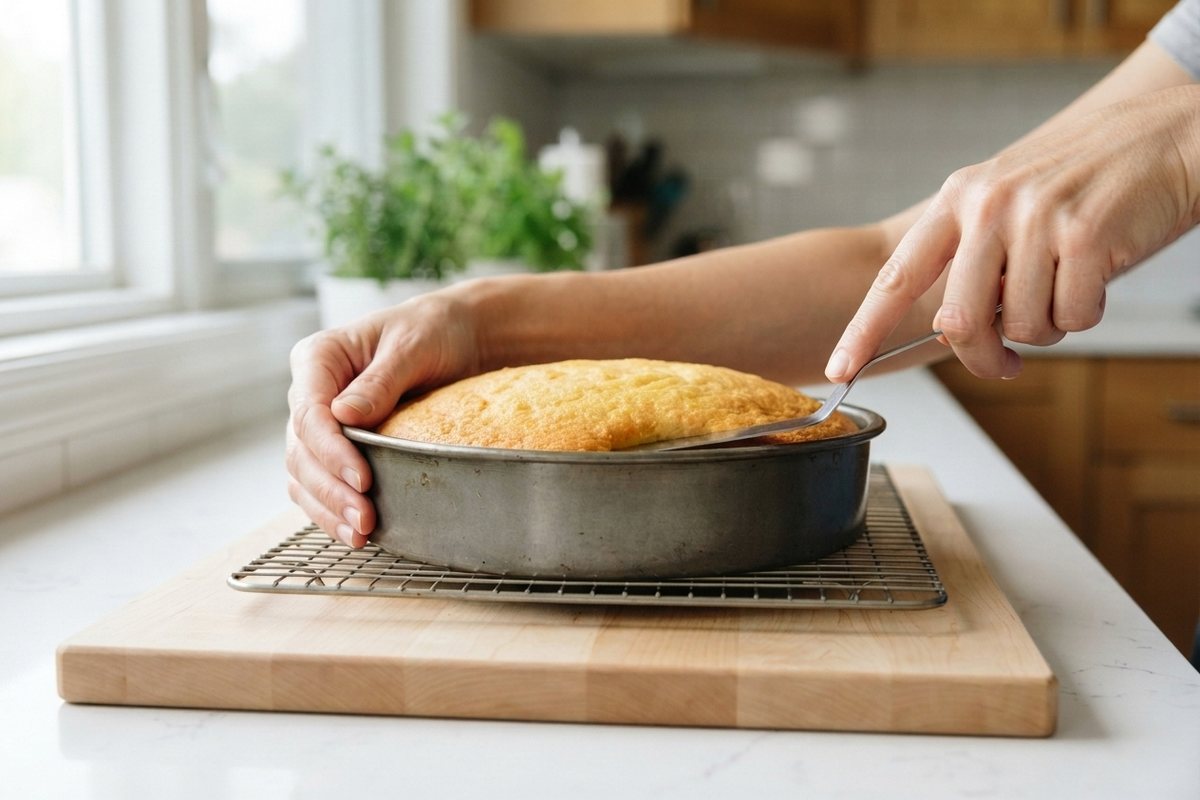
2Cakes also pull slightly away from the pan sides when done.
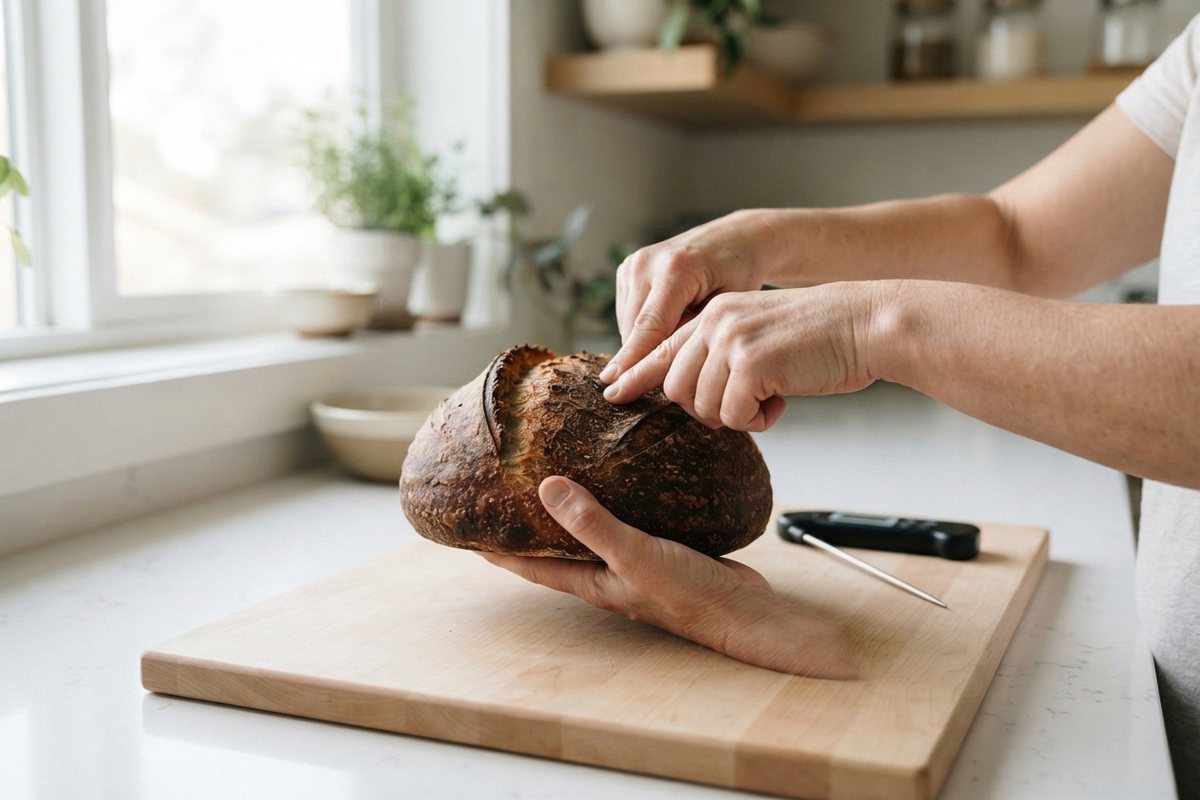
3Bread: the center reads about 190-210°F, and the bottom sounds hollow when tapped.
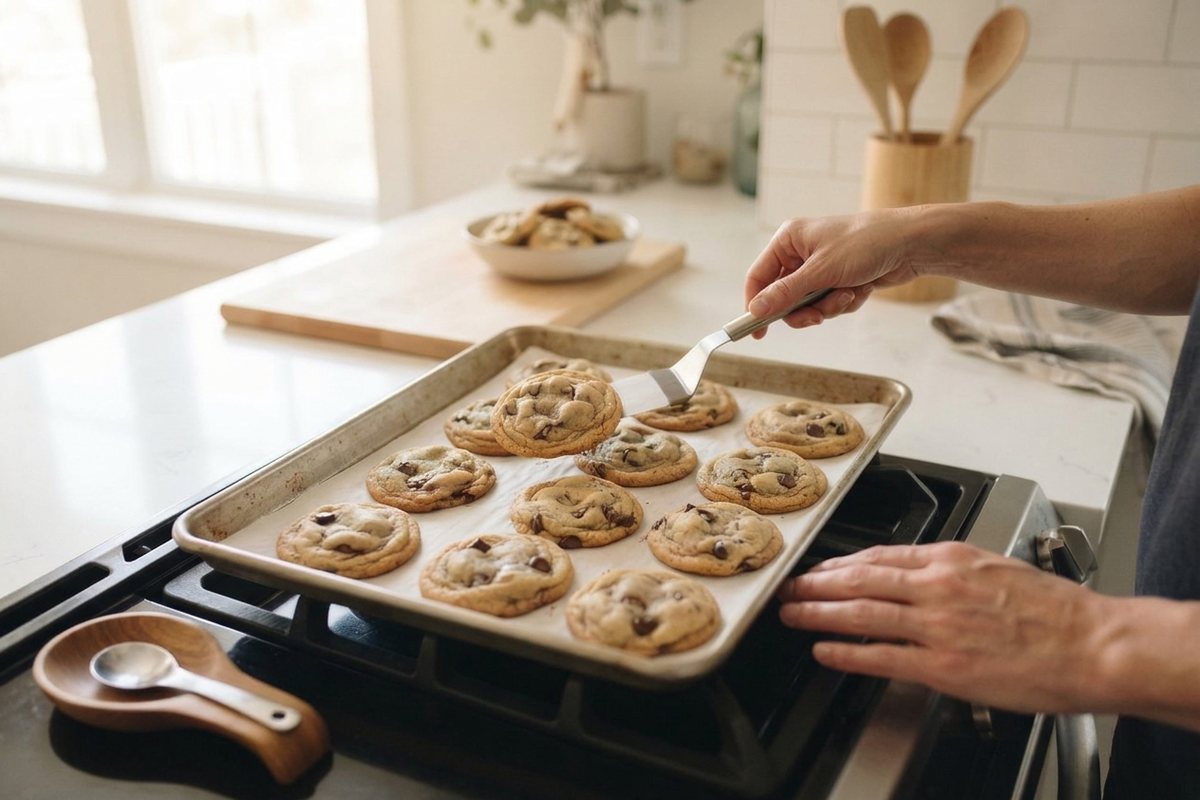
4Cookies: edges are set and lightly golden; centers can look a little soft.
Why does it work?
Ovens run hot or cold, so the recipe time is only a guide. As starches and proteins set, the crumb firms and stops sticking to a tester, and bread's internal temperature tells you the inside has set.
What are the common mistakes?
- Opening the oven door often — heat escapes and cakes can sink.
- Waiting for cookie centers to firm — they keep baking on the hot sheet and turn hard.
Still stuck? Watch someone do it on YouTube.
More baking and pastry
- FoldingMixing something light (whipped cream, beaten egg whites) into something heavier without knocking the air out.Intermediate
- Creaming butter and sugarBeating soft butter with sugar until pale and fluffy — the start of most cakes and cookies.Beginner
- KneadingWorking dough by hand or machine until smooth and stretchy.Beginner
- Proofing (letting dough rise)Letting yeast dough rest and rise before baking.Beginner
- Cutting in butterWorking cold butter into flour until it's in small lumps — pie crust, biscuits, scones.Intermediate
- Blind bakingBaking a pie crust before it's filled.Intermediate