Techniques › Heat and cooking methods
Glazing
Beginner Heat and cooking methods
Glazing is brushing or tossing food with a sweet or sticky sauce near the end of cooking to form a shiny coating.
Written with AI help from the sources listed, and published by Cory. Sources: USDA safe minimum internal temperatures, USDA on the danger zone (40-140°F). Spot a mistake? Tell us and we'll fix it.
How do you do it?
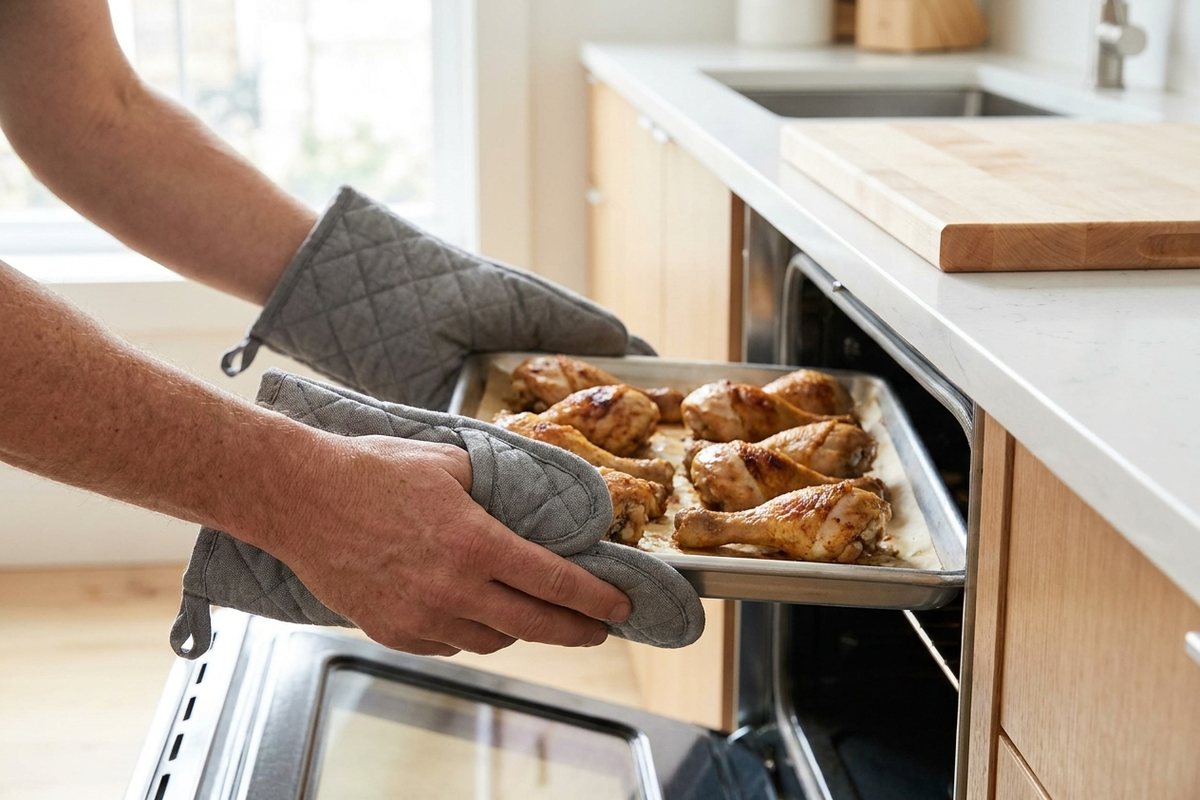
1Cook the food most of the way first.
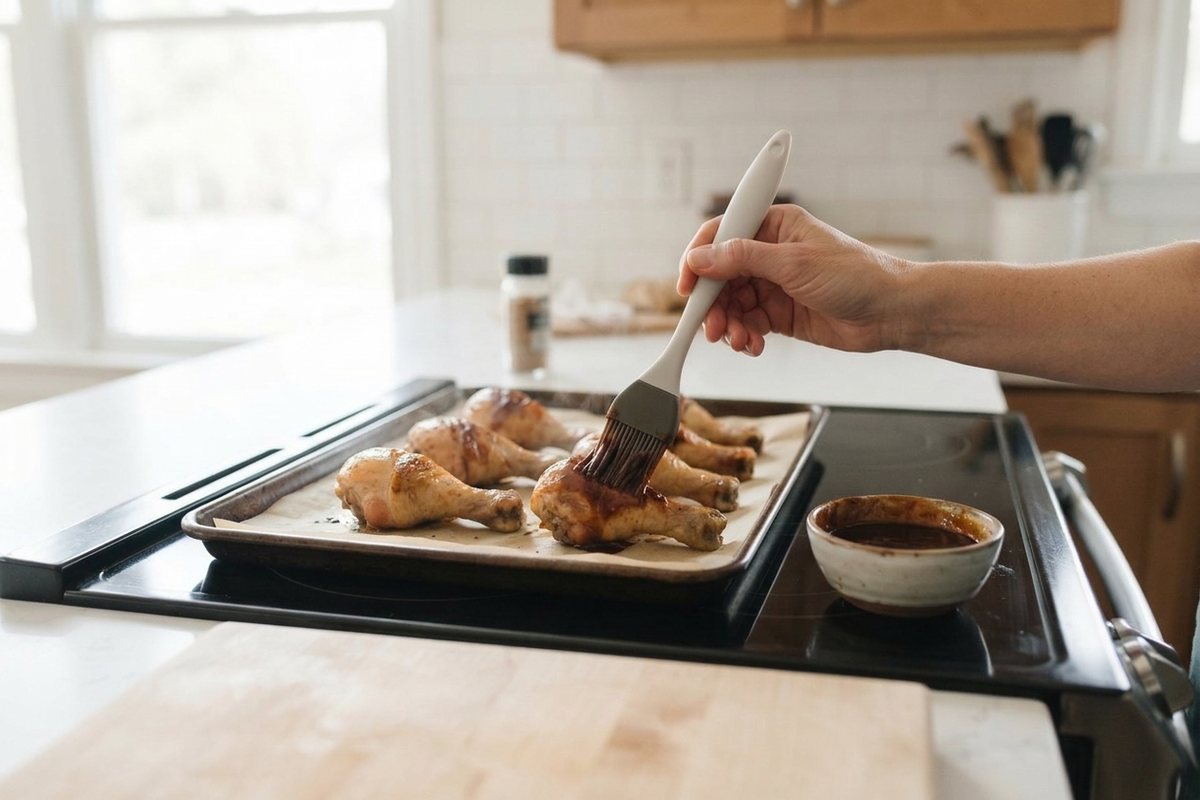
2Brush on a thin layer of glaze during the last 5-15 minutes.
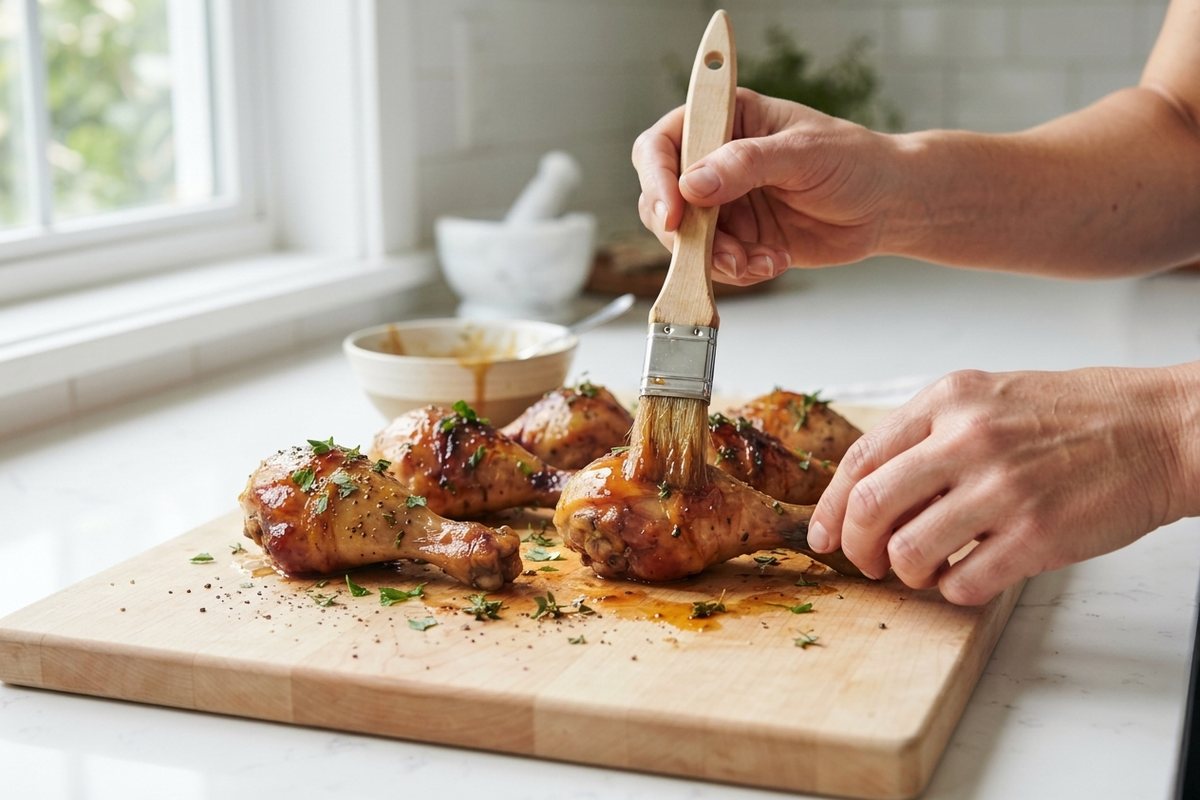
3Add another thin coat or two every few minutes, letting each one set and turn glossy.
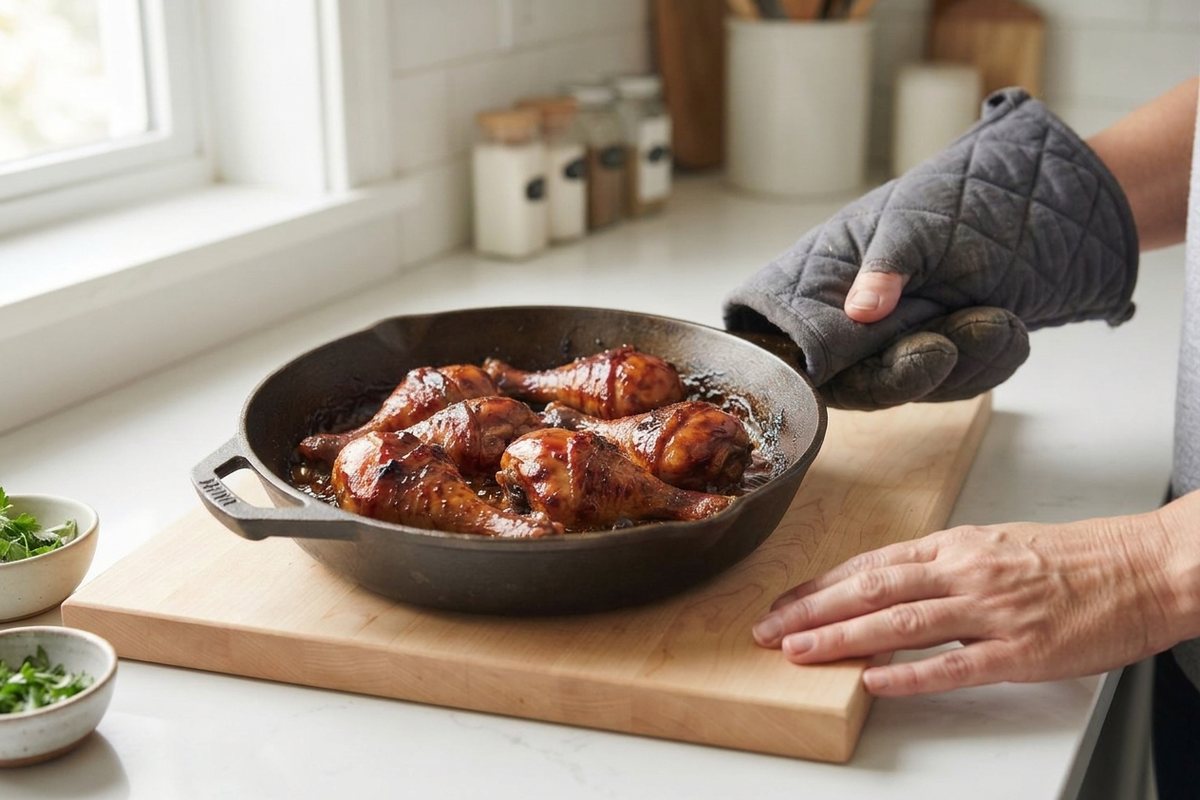
4Watch closely; pull it when the glaze is bubbling and lightly caramelized, not black.
Why does it work?
Glazes are usually high in sugar, which caramelizes and thickens into a shiny layer with heat. Sugar burns quickly, so adding it late gives it time to set without scorching.
What are the common mistakes?
- Glazing from the start — sugar burns and turns bitter before the food is done.
- One thick coat — it slides off instead of setting.
Still stuck? Watch someone do it on YouTube.
More heat and cooking methods
- SearingBrowning the surface of meat or fish in a very hot pan for flavor.Beginner
- BraisingBrowning food, then cooking it slowly, partly covered in liquid, in a covered pot.Intermediate
- SautéingCooking pieces quickly in a little fat over medium-high heat, moving them often.Beginner
- SweatingCooking onions and other aromatics gently so they soften without browning.Beginner
- PoachingCooking gently in liquid kept just below a simmer (about 160–180°F).Intermediate
- Simmer vs. boilA simmer has small bubbles gently breaking the surface; a boil is big, constant, rolling bubbles.Beginner