Preheating the pan and the oven
Beginner Kitchen basics
Preheating the pan and the oven is letting your oven or pan fully reach temperature before the food goes in.
Written with AI help from the sources listed, and published by Cory. Sources: USDA safe minimum internal temperatures, USDA on the danger zone (40-140°F). Spot a mistake? Tell us and we'll fix it.
How do you do it?
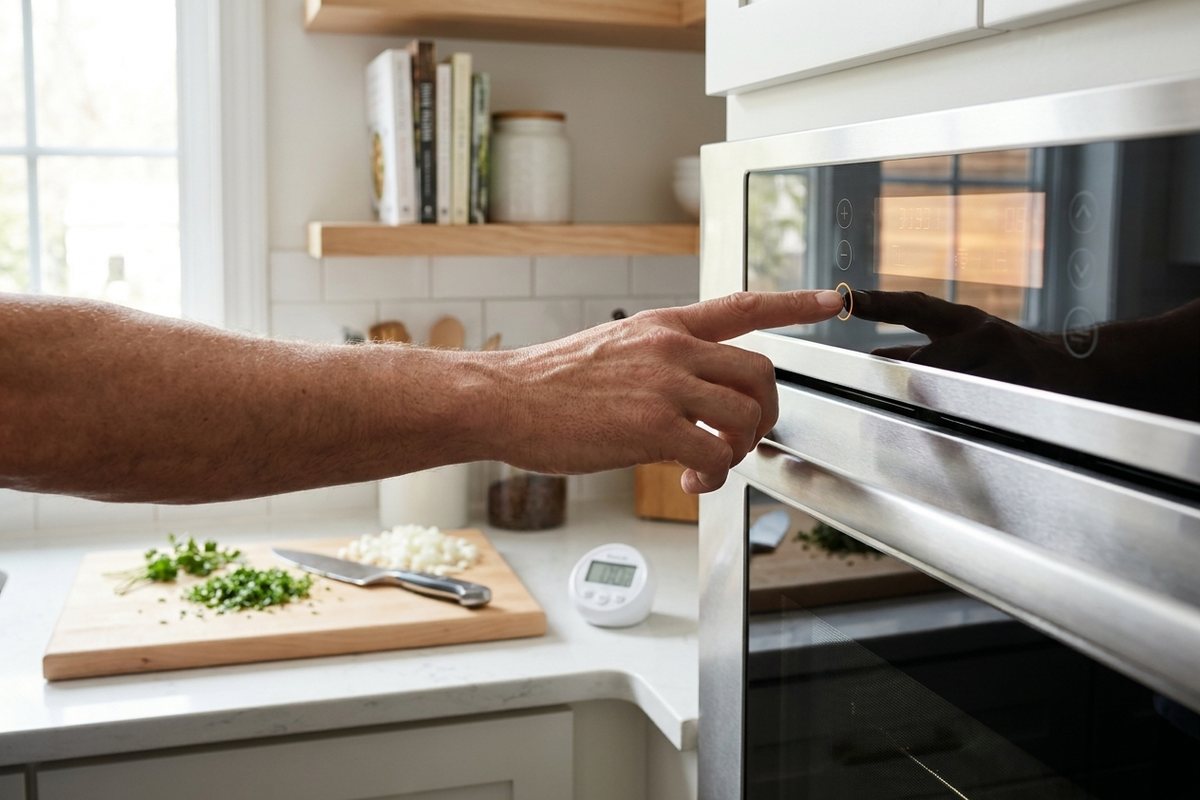
1Turn the oven on 15 to 20 minutes before you need it; many ovens beep early, so give it a few extra minutes.
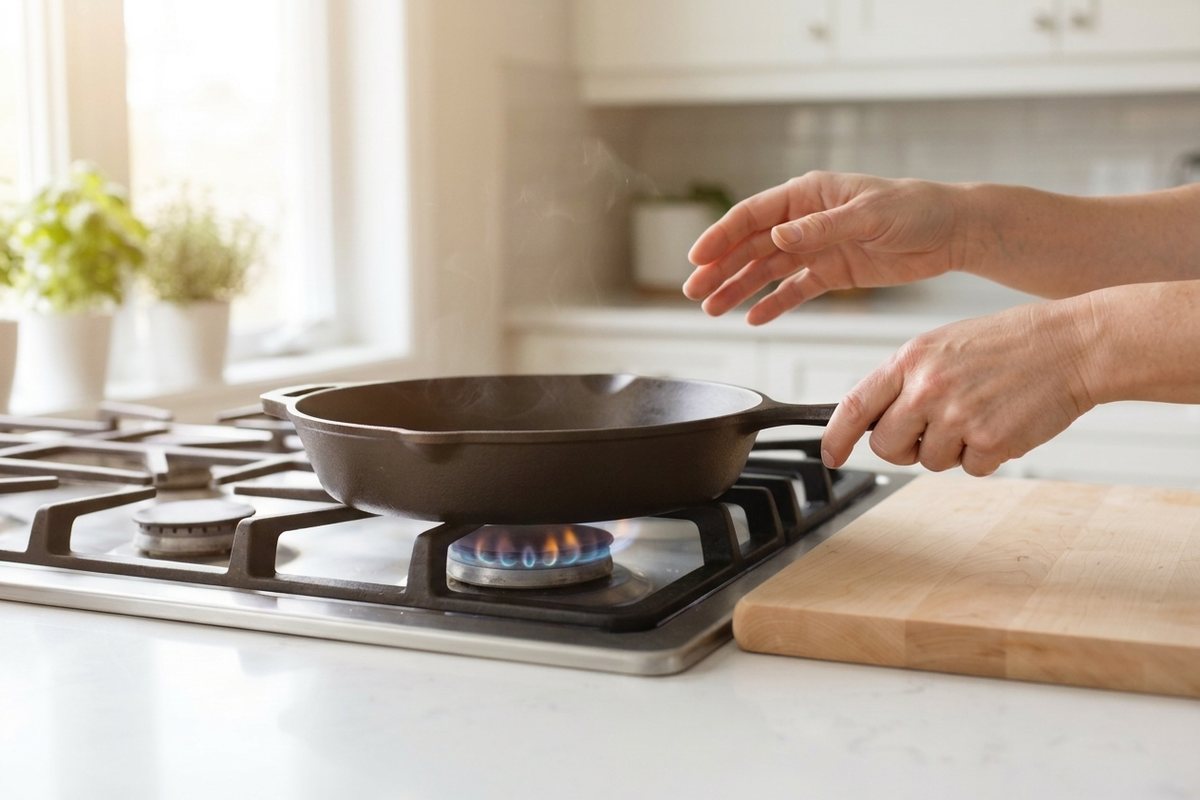
2Heat a skillet over medium to medium-high for 2 to 3 minutes before adding oil.
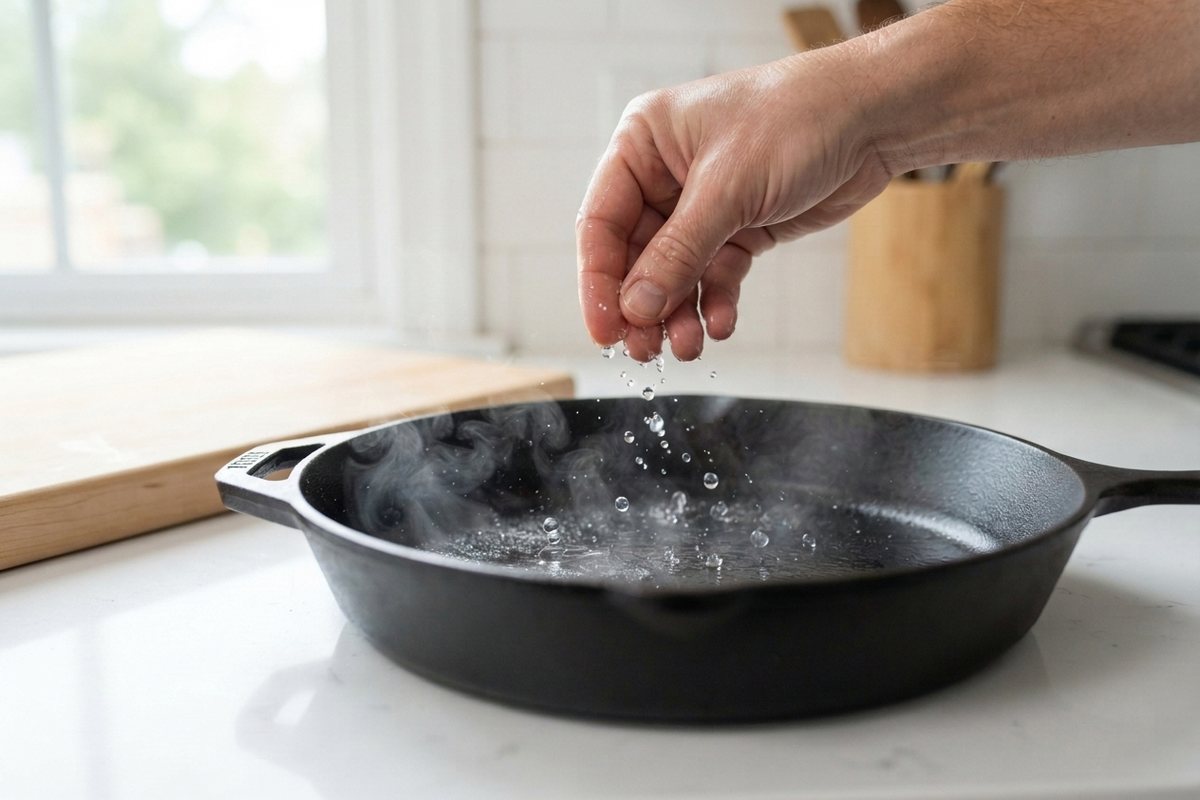
3Test the pan with a few drops of water: they should sizzle and skitter away right away.
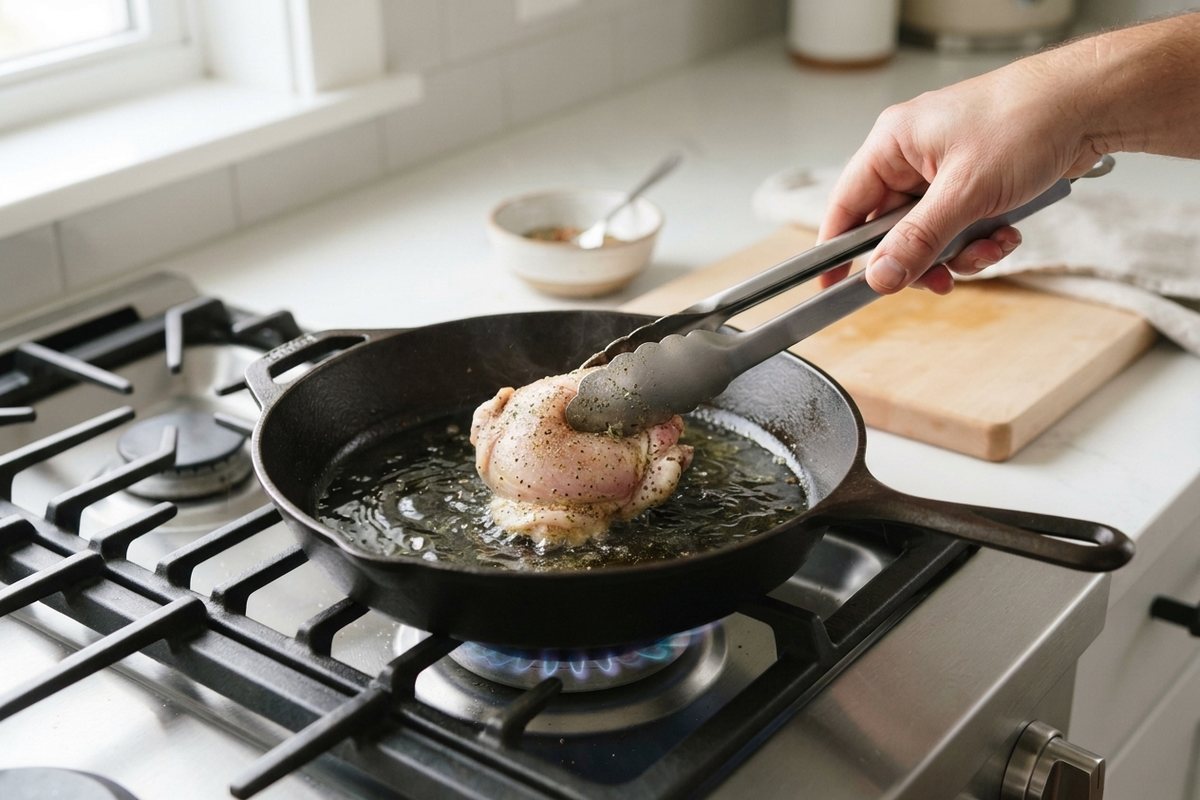
4Add oil, let it heat until it shimmers, then add the food.
Why does it work?
Cooking times and browning assume the heat is already there. Food in a cold pan or oven warms slowly, sticks, releases water and steams instead of browning, and bakes unevenly.
What are the common mistakes?
- Putting food in a cold pan — it sticks and turns gray instead of brown.
- Trusting the preheat beep — the oven may still be cooler than set.
Still stuck? Watch someone do it on YouTube.
More kitchen basics
- Mise en place (getting everything ready first)Prepping and measuring every ingredient and setting out your tools before you turn on the heat.Beginner
- Reading a recipe before you startReading the whole recipe start to finish before you cook so there are no surprises.Beginner
- Knowing when oil is hot, and smoke pointsReading the signs that oil is hot enough to cook in, and choosing an oil that suits the heat.Beginner
- Measuring ingredients (dry vs. liquid)Using the right cups and method so your amounts match what the recipe intended.Beginner
- Using a meat thermometerChecking the inside temperature of meat so you know it's safe and not overcooked.Beginner
- Carryover cookingFood keeps cooking from its own heat after you take it off the stove or out of the oven.Intermediate