Using a meat thermometer
Beginner Kitchen basics
Using a meat thermometer is checking the inside temperature of meat so you know it's safe and not overcooked.
Written with AI help from the sources listed, and published by Cory. Sources: USDA safe minimum internal temperatures, USDA on the danger zone (40-140°F). Spot a mistake? Tell us and we'll fix it.
How do you do it?
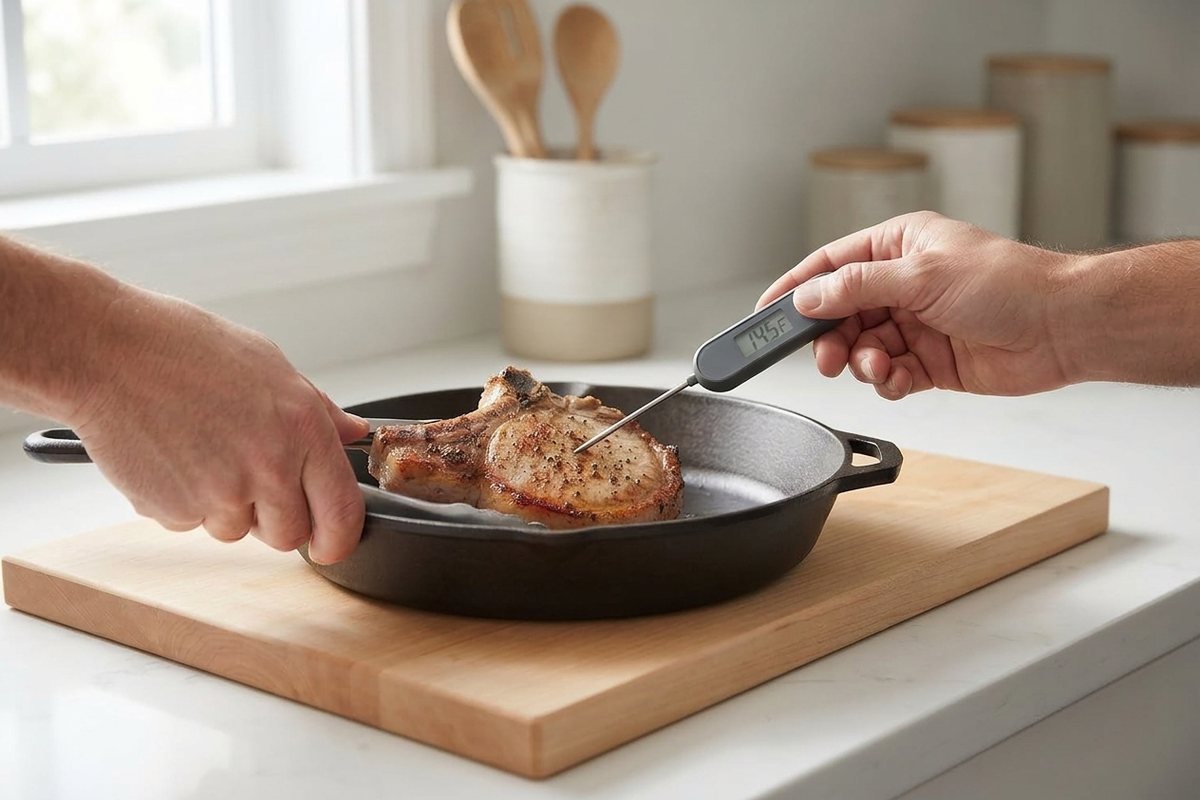
1Push the probe into the thickest part of the meat, away from bone, fat and gristle.
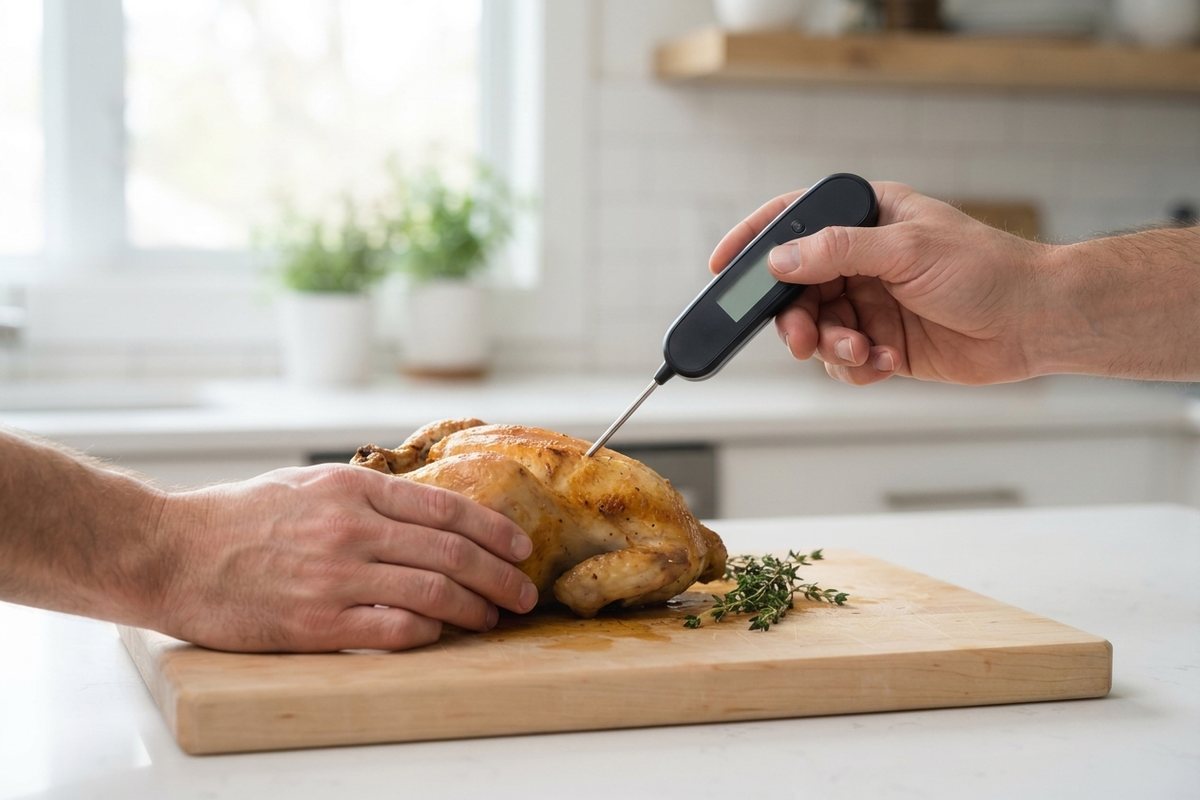
2Wait for the number to stop moving; an instant-read takes a few seconds.
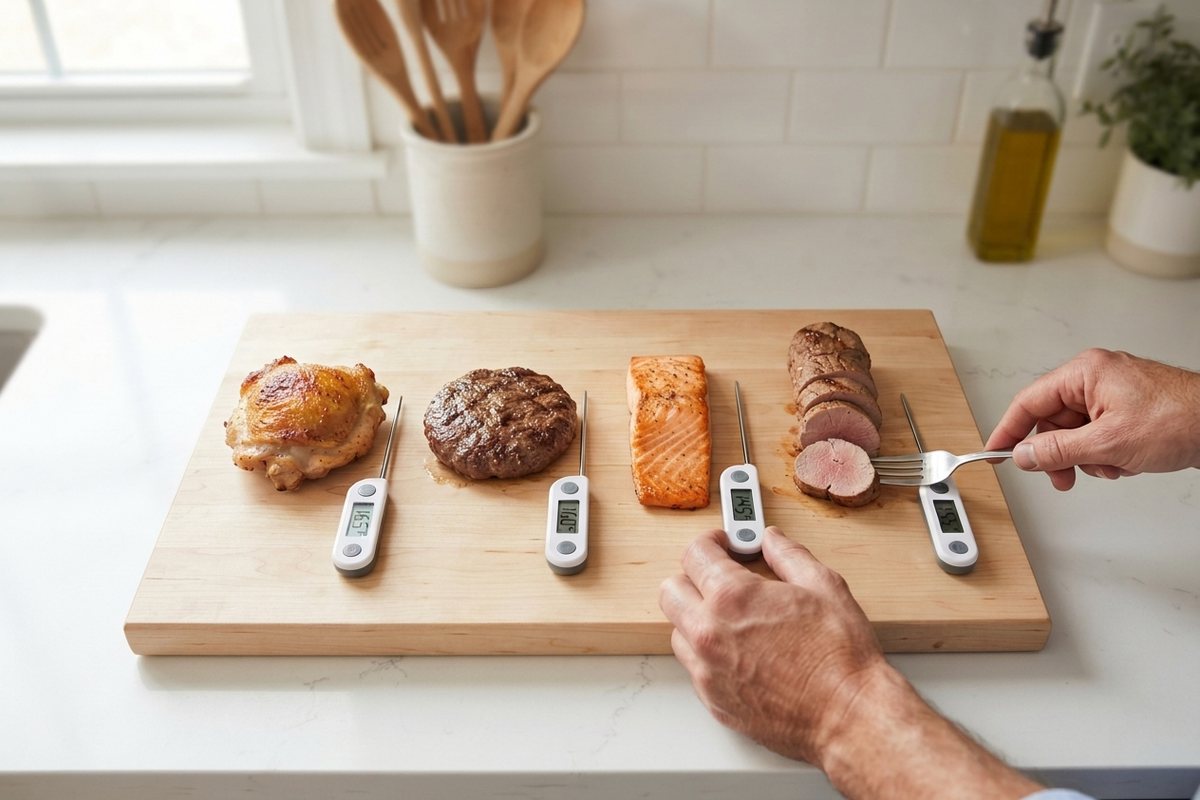
3Safe minimums: poultry 165°F, ground meat 160°F, fish 145°F, whole cuts of beef, pork or lamb 145°F plus a 3-minute rest.
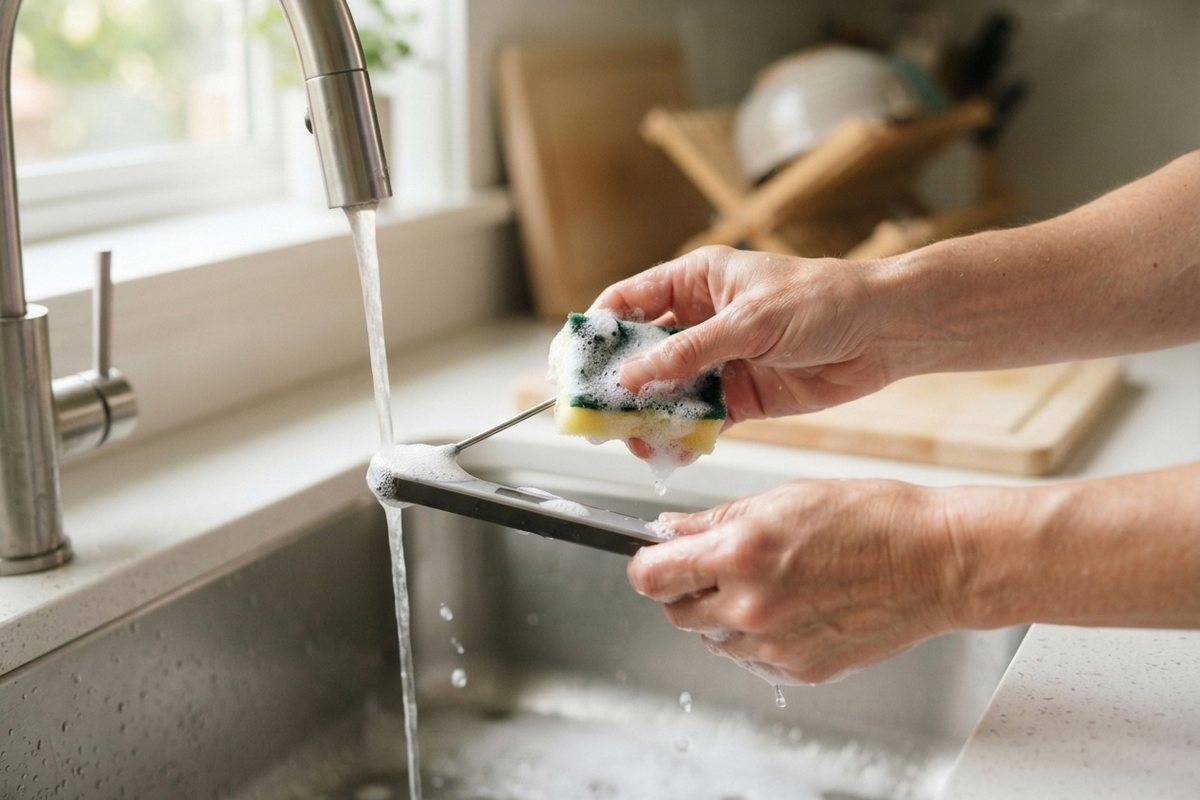
4Wash the probe with hot, soapy water between raw and cooked checks.
Why does it work?
Color and cooking time are unreliable guides; meat can look done before it's safe, or be overcooked long before it looks it. Temperature is the only sure test.
What are the common mistakes?
- Touching bone with the probe — bone reads hotter and gives a false number.
- Checking only the thin end — the thick part may still be underdone.
- Judging by color — pink or brown doesn't reliably tell you it's safe.
Still stuck? Watch someone do it on YouTube.
More kitchen basics
- Mise en place (getting everything ready first)Prepping and measuring every ingredient and setting out your tools before you turn on the heat.Beginner
- Reading a recipe before you startReading the whole recipe start to finish before you cook so there are no surprises.Beginner
- Preheating the pan and the ovenLetting your oven or pan fully reach temperature before the food goes in.Beginner
- Knowing when oil is hot, and smoke pointsReading the signs that oil is hot enough to cook in, and choosing an oil that suits the heat.Beginner
- Measuring ingredients (dry vs. liquid)Using the right cups and method so your amounts match what the recipe intended.Beginner
- Carryover cookingFood keeps cooking from its own heat after you take it off the stove or out of the oven.Intermediate