Techniques › Heat and cooking methods
Steaming
Beginner Heat and cooking methods
Steaming is cooking food above simmering water so the rising steam surrounds and cooks it gently.
Written with AI help from the sources listed, and published by Cory. Sources: USDA safe minimum internal temperatures, USDA on the danger zone (40-140°F). Spot a mistake? Tell us and we'll fix it.
How do you do it?
1Add about 1 inch of water to a pot and bring it to a simmer.
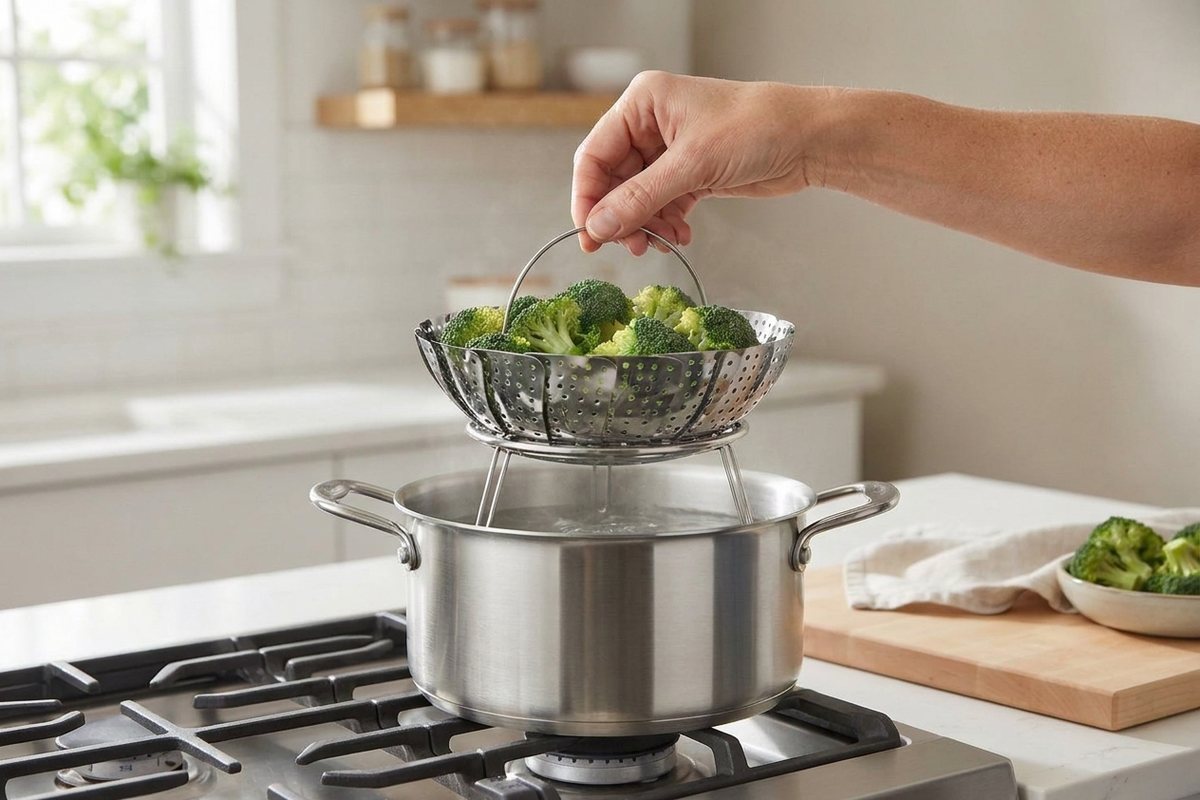
2Set food in a steamer basket so it sits above, not in, the water.
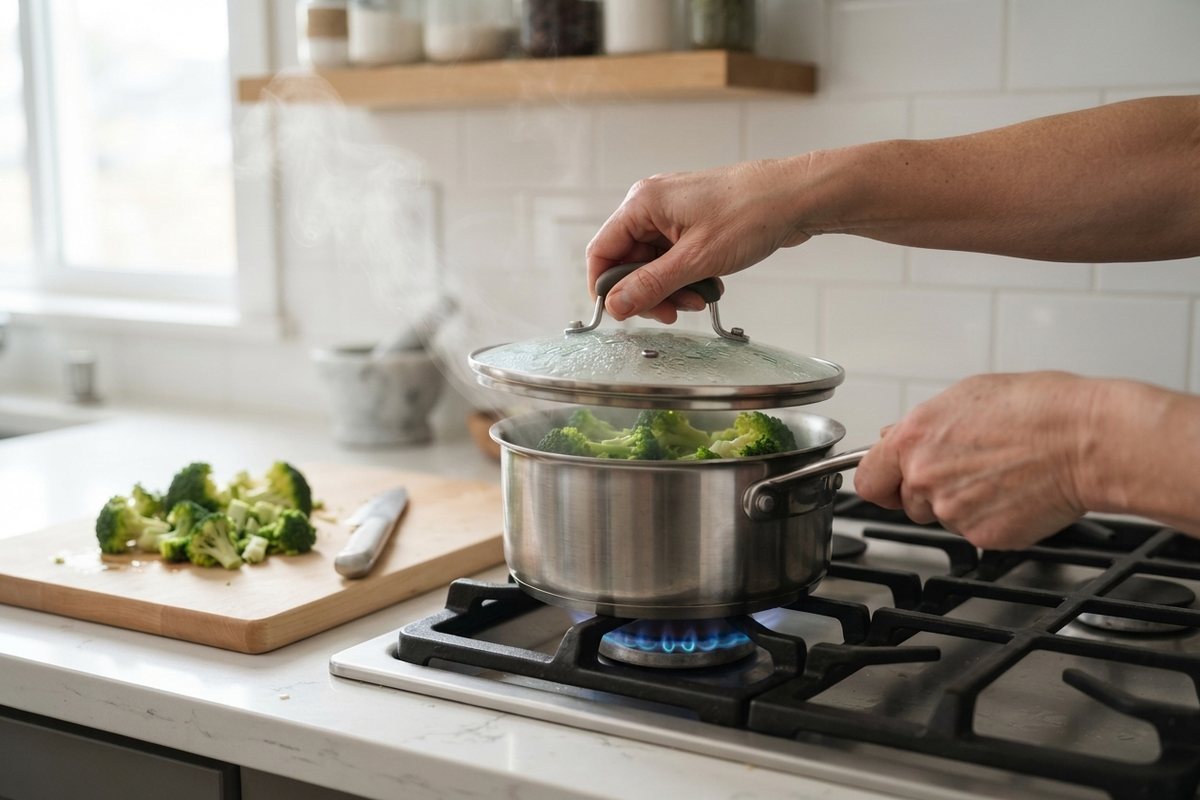
3Cover tightly and cook; most cut vegetables take 3-8 minutes.
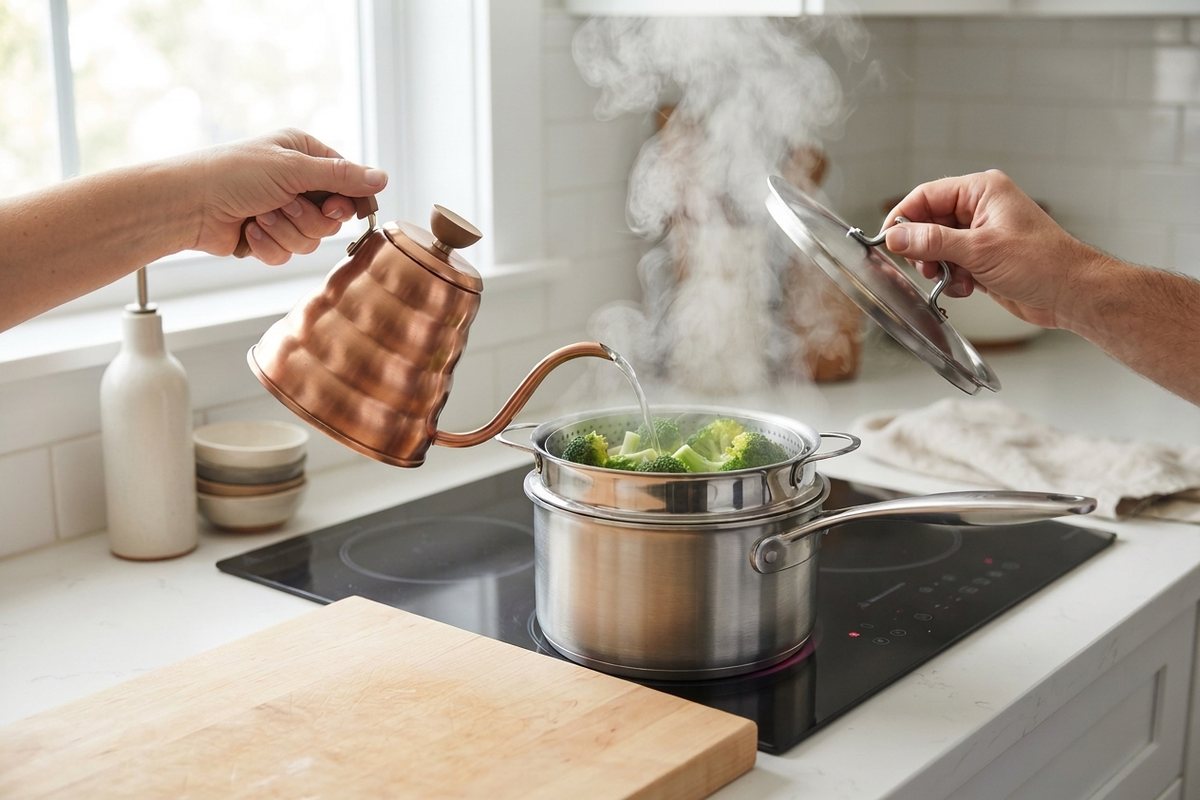
4Check that the water hasn't boiled dry for longer cooks, and add more hot water if needed.
Why does it work?
Steam transfers heat efficiently but never gets hotter than about 212°F, so food cooks evenly without browning or drying out. Vegetables keep more color and texture than when boiled.
What are the common mistakes?
- Letting food touch the water — it boils and gets waterlogged.
- Lifting the lid often — steam escapes and cooking slows.
Still stuck? Watch someone do it on YouTube.
More heat and cooking methods
- SearingBrowning the surface of meat or fish in a very hot pan for flavor.Beginner
- BraisingBrowning food, then cooking it slowly, partly covered in liquid, in a covered pot.Intermediate
- SautéingCooking pieces quickly in a little fat over medium-high heat, moving them often.Beginner
- SweatingCooking onions and other aromatics gently so they soften without browning.Beginner
- PoachingCooking gently in liquid kept just below a simmer (about 160–180°F).Intermediate
- Simmer vs. boilA simmer has small bubbles gently breaking the surface; a boil is big, constant, rolling bubbles.Beginner