Techniques › Flavor and seasoning
Seasoning to taste
Beginner Flavor and seasoning
Seasoning to taste is tasting and adding salt, acid or sweetness until it tastes right to you.
Written with AI help from the sources listed, and published by Cory. Spot a mistake? Tell us and we'll fix it.
How do you do it?
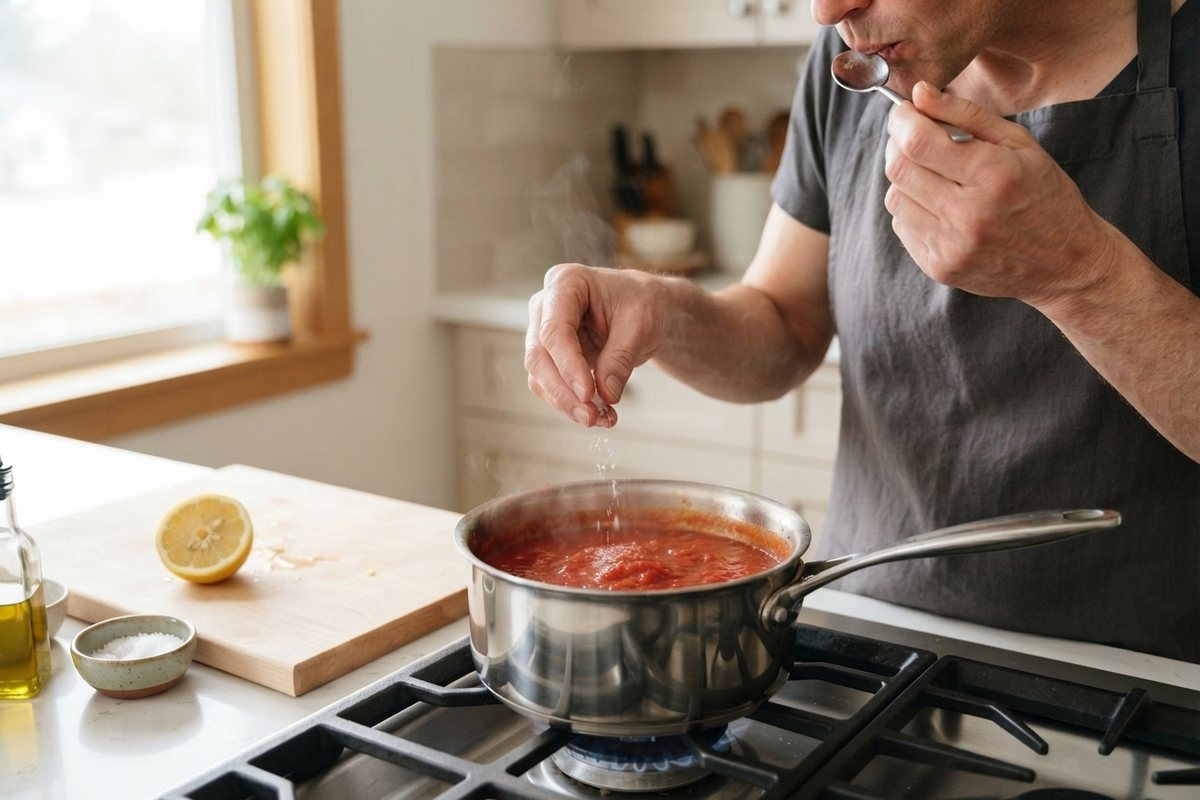
1Taste, add a little salt, stir, taste again. If it's flat but salty enough, add acid (lemon, vinegar).
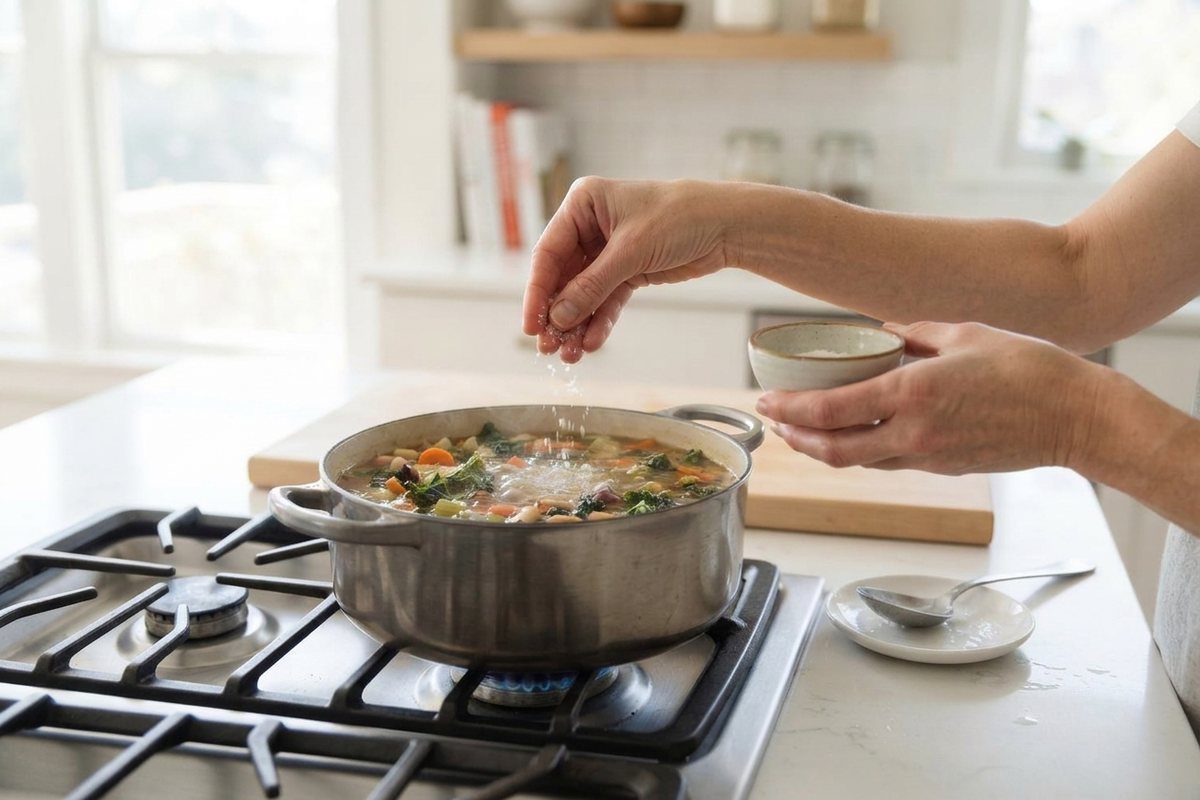
2Season in layers as you cook, then adjust at the end.
Why does it work?
Salt makes flavors stronger and less bitter; acid makes them brighter. Small steps keep you from overshooting.
What are the common mistakes?
- Only salting at the very end.
- Adding a lot at once.
Still stuck? Watch someone do it on YouTube.
Learn by cooking. In Pantry to Pan, technique words in your recipes' steps link straight
to guides like this one, right when you need them.
Try it free for 14 daysMore flavor and seasoning
- Blooming spicesCooking ground spices briefly in hot fat before adding liquid. (Blooming gelatin means soaking it in cold water first.)Beginner
- Toasting nuts, seeds and spicesHeating nuts, seeds or whole spices in a dry pan until fragrant and lightly browned.Beginner
- Balancing salt, acid, fat and heatTasting a dish and adjusting salt, acid, fat and spice until it tastes complete.Intermediate
- Aromatic bases: mirepoix, sofrito, the holy trinityChopped vegetables cooked slowly in fat at the start of a dish to build its flavor base.Beginner
- Spice rubsA mix of salt, spices and often sugar pressed onto meat before cooking.Beginner
- MarinatingSoaking food in a seasoned liquid before cooking to flavor its surface.Beginner