Caring for cast iron
Beginner Kitchen basics
Caring for cast iron is cleaning and oiling a cast-iron pan so it stays rust-free and naturally nonstick.
Written with AI help from the sources listed, and published by Cory. Sources: USDA safe minimum internal temperatures, USDA on the danger zone (40-140°F). Spot a mistake? Tell us and we'll fix it.
How do you do it?
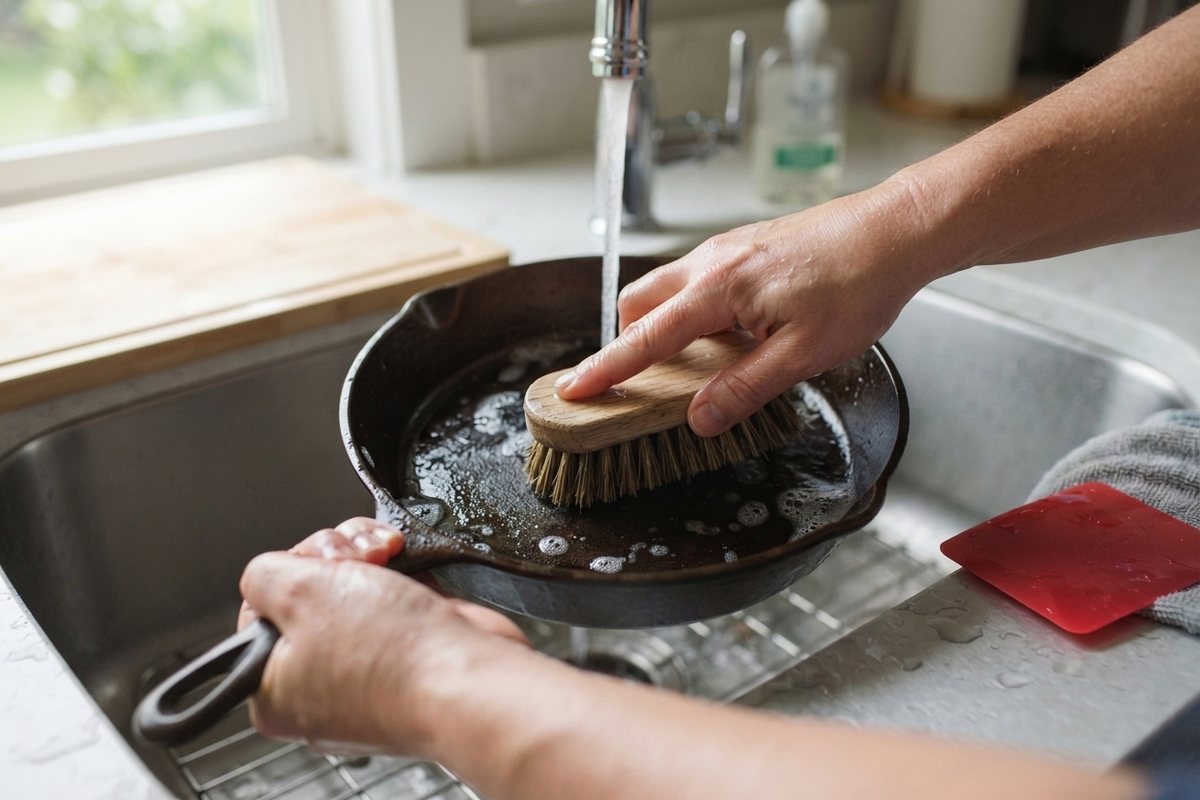
1Clean it while warm with hot water and a brush or scraper; a little dish soap is fine.
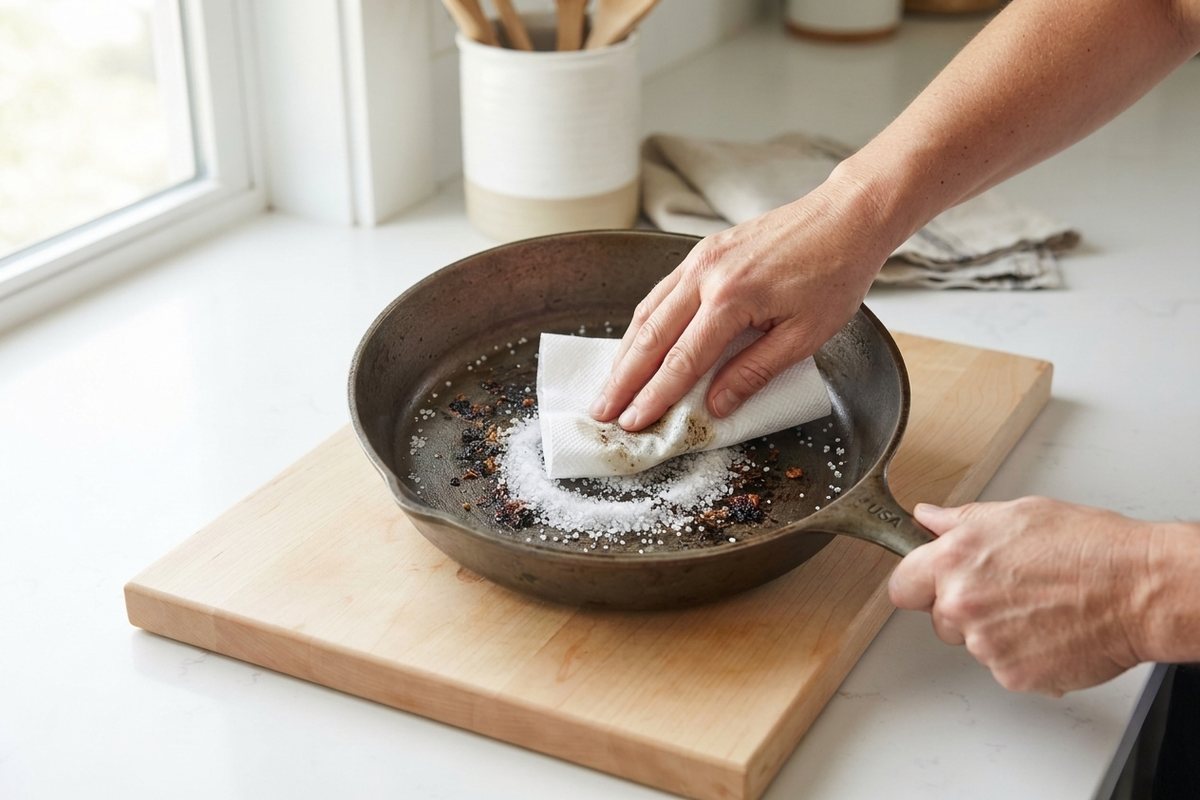
2Scrub stuck bits with coarse salt and a paper towel.
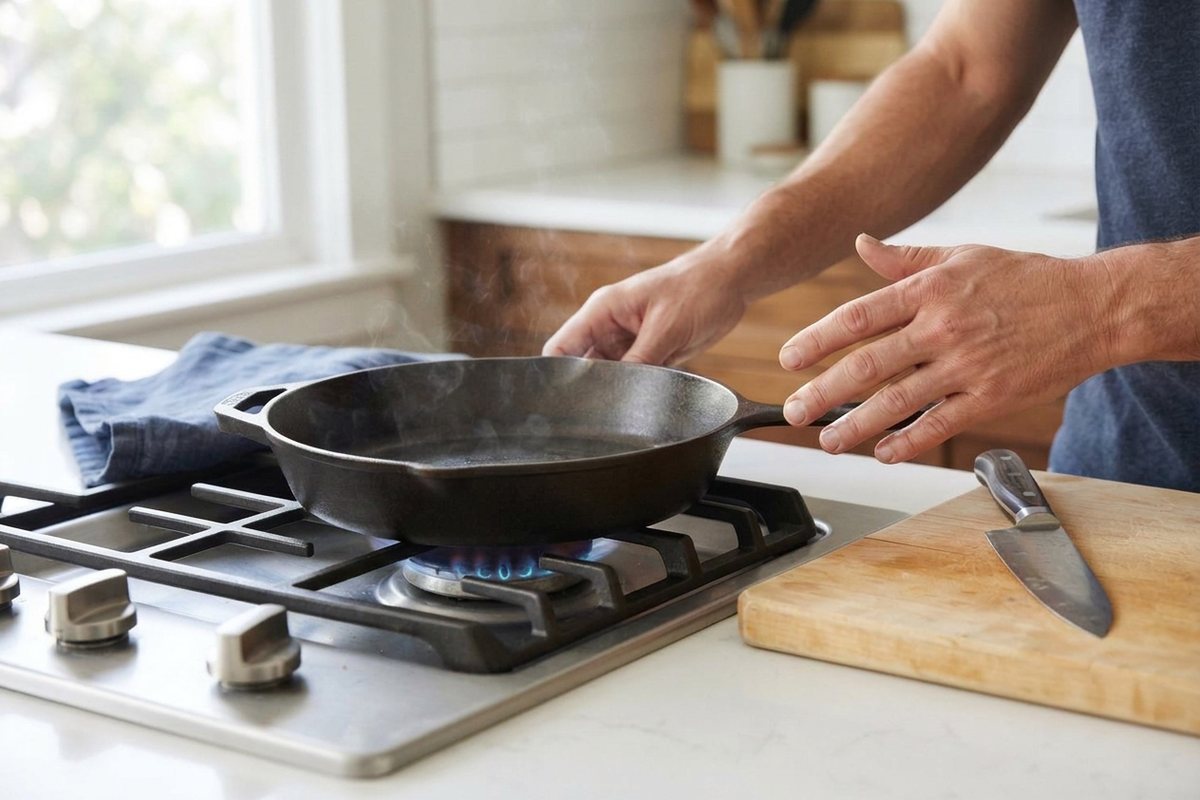
3Dry it completely, then set it on low heat for a minute or two.
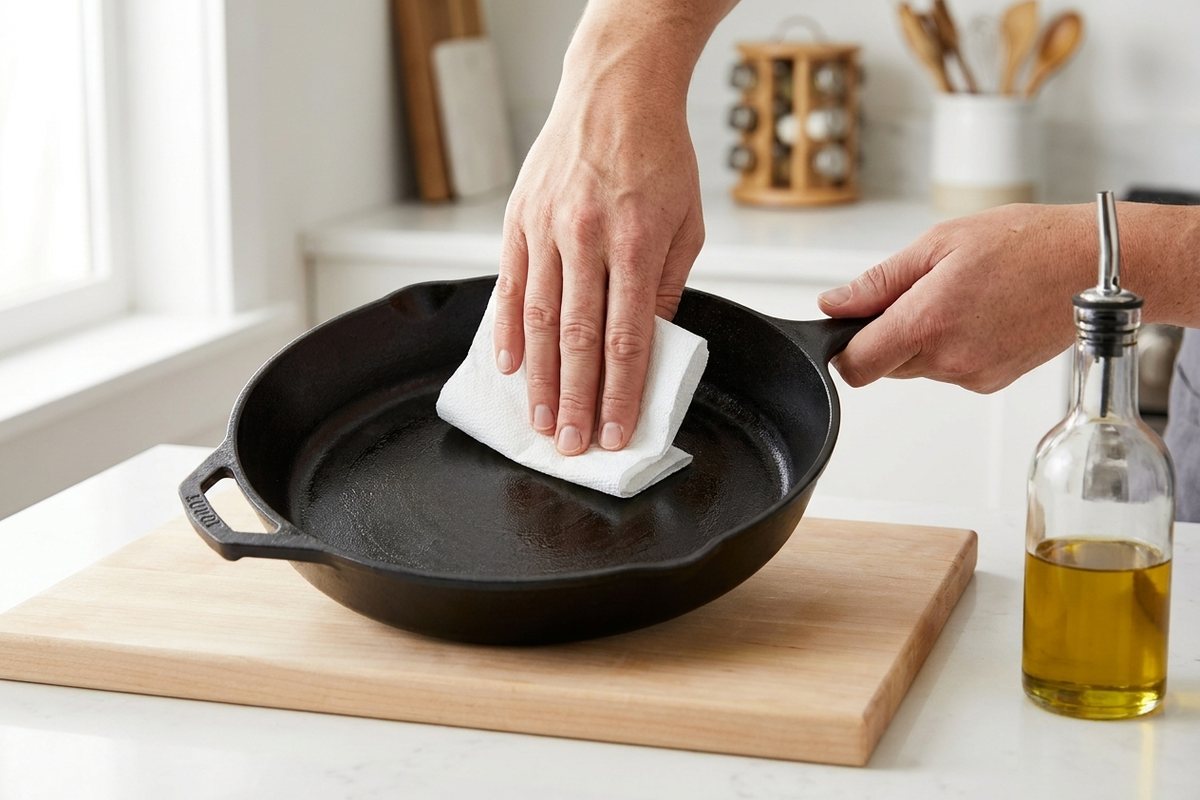
4Rub in a very thin layer of oil and wipe it until the pan looks almost dry.
Why does it work?
Seasoning is oil that has baked into a hard, slick coating bonded to the iron. Water left on the bare metal rusts it, and thin oil layers heated over time build up the coating.
What are the common mistakes?
- Soaking it in water or the dishwasher — it rusts and loses seasoning.
- Leaving a thick coat of oil — it turns sticky and gummy.
- Simmering acidic sauces a long time in a new pan — it can strip seasoning and taste metallic.
Still stuck? Watch someone do it on YouTube.
More kitchen basics
- Mise en place (getting everything ready first)Prepping and measuring every ingredient and setting out your tools before you turn on the heat.Beginner
- Reading a recipe before you startReading the whole recipe start to finish before you cook so there are no surprises.Beginner
- Preheating the pan and the ovenLetting your oven or pan fully reach temperature before the food goes in.Beginner
- Knowing when oil is hot, and smoke pointsReading the signs that oil is hot enough to cook in, and choosing an oil that suits the heat.Beginner
- Measuring ingredients (dry vs. liquid)Using the right cups and method so your amounts match what the recipe intended.Beginner
- Using a meat thermometerChecking the inside temperature of meat so you know it's safe and not overcooked.Beginner