Thawing food safely
Beginner Kitchen basics
Thawing food safely is defrosting frozen food in a way that keeps it out of the temperature range where bacteria grow.
Written with AI help from the sources listed, and published by Cory. Sources: USDA safe minimum internal temperatures, USDA on the danger zone (40-140°F). Spot a mistake? Tell us and we'll fix it.
How do you do it?
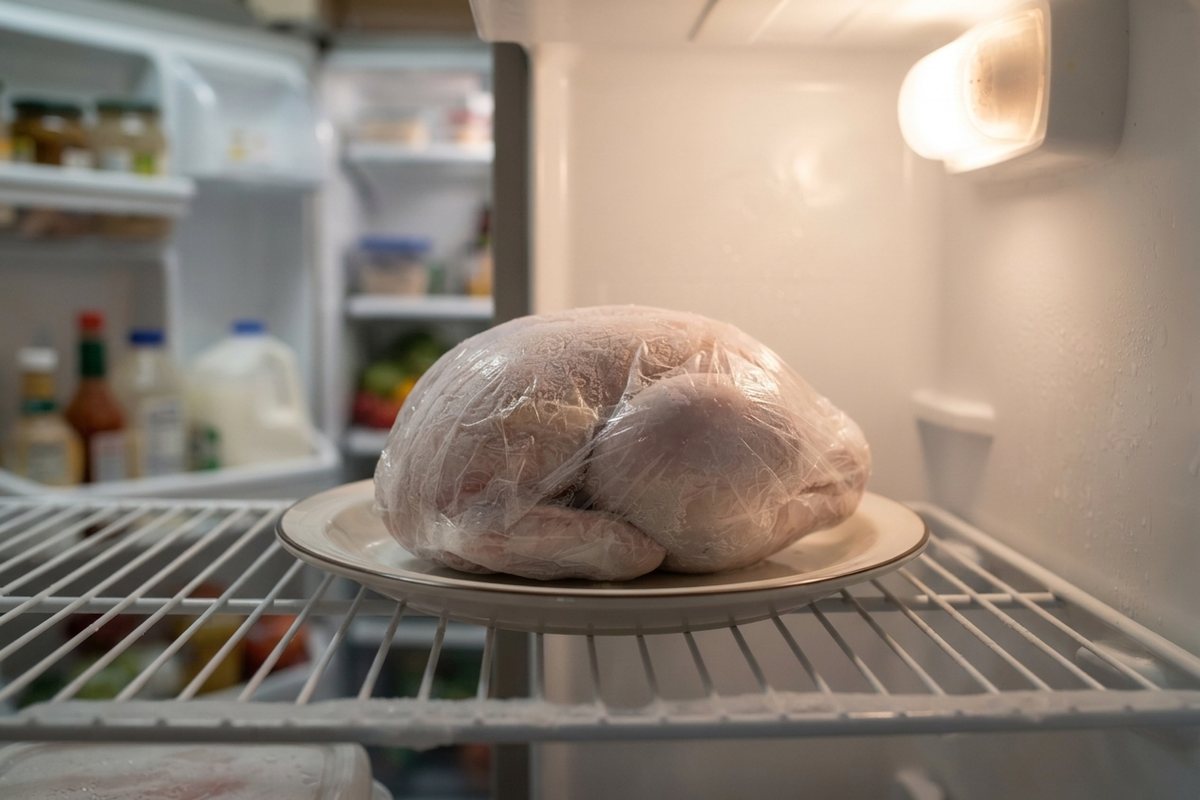
1Best: thaw in the fridge; allow about 24 hours per 4 to 5 pounds for big items, overnight for smaller ones.
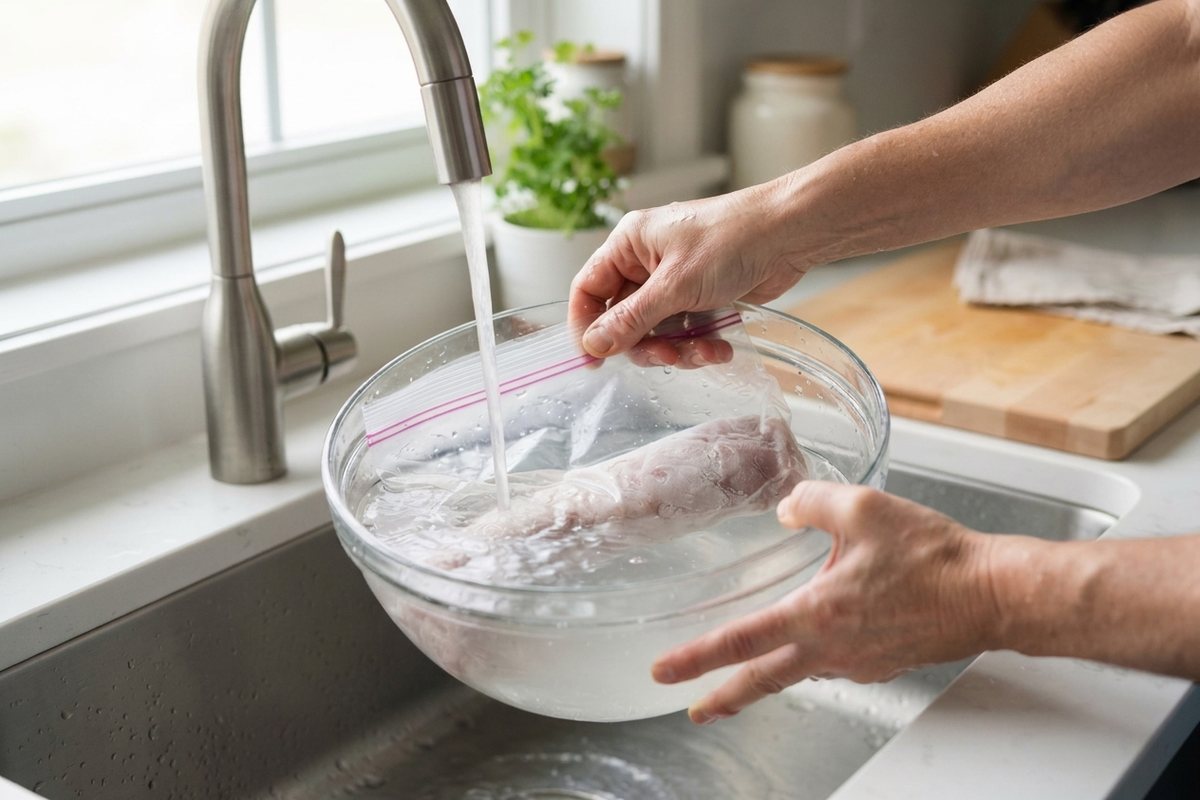
2Faster: seal the food in a leak-proof bag and submerge it in cold water, changing the water every 30 minutes.
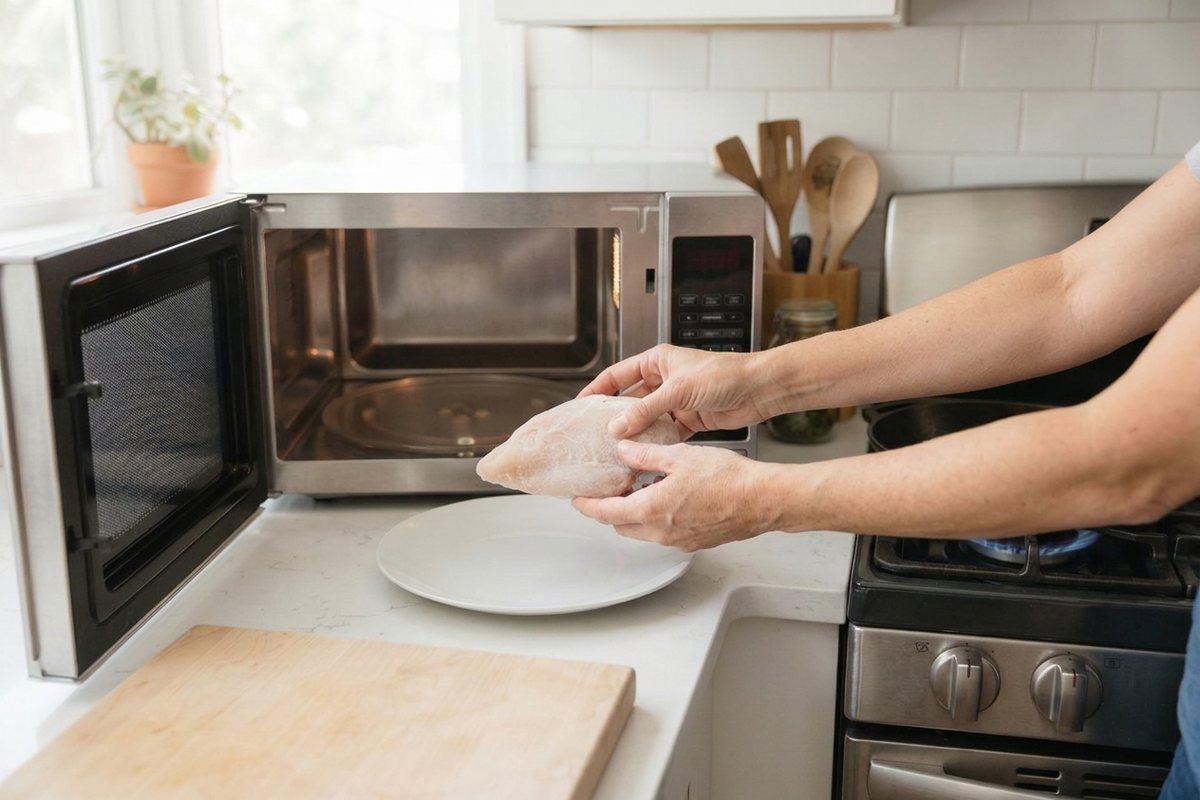
3Fastest: use the microwave's defrost setting, then cook the food right away.
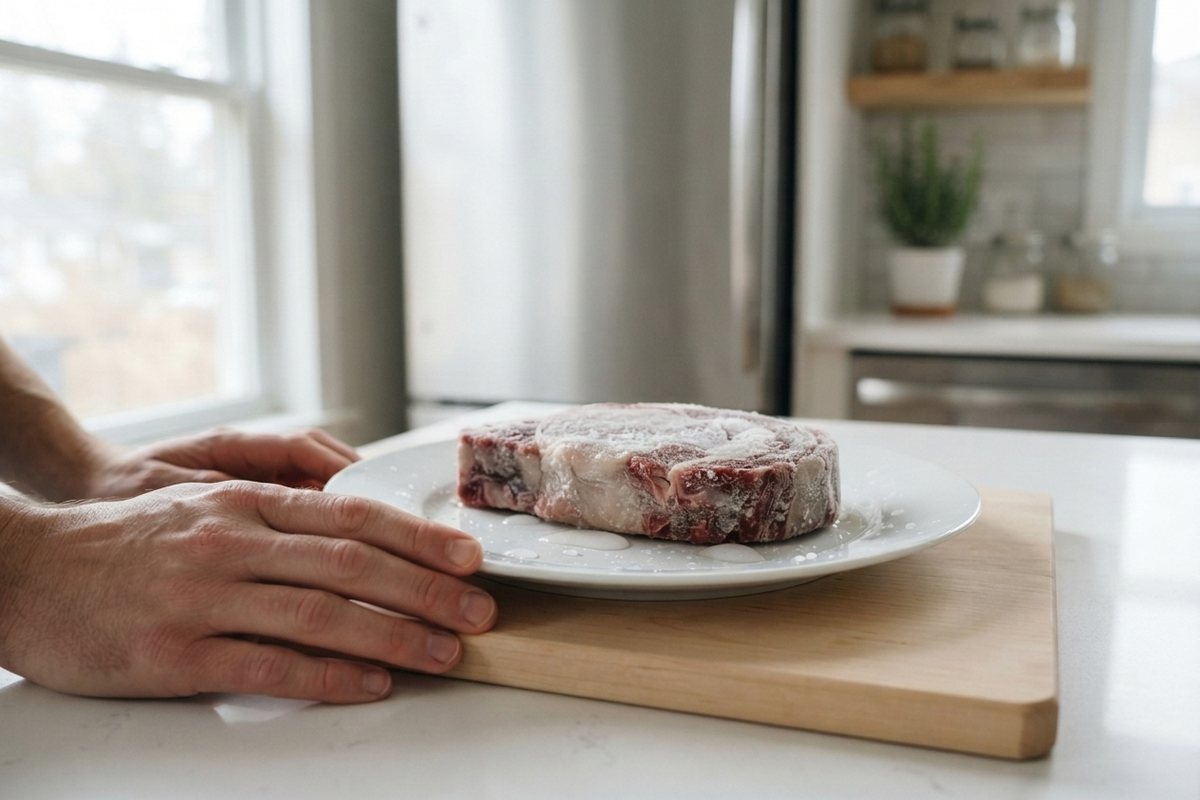
4Never thaw on the counter.
Why does it work?
On the counter, the outside warms into the danger zone while the center is still frozen, and bacteria multiply there. Each safe method keeps the surface cold or moves straight to cooking.
What are the common mistakes?
- Thawing on the counter — the outer layer sits warm for hours.
- Using warm water to speed it up — the surface warms into the danger zone.
- Microwave-thawing and cooking later — parts are already warm, so cook immediately.
Still stuck? Watch someone do it on YouTube.
More kitchen basics
- Mise en place (getting everything ready first)Prepping and measuring every ingredient and setting out your tools before you turn on the heat.Beginner
- Reading a recipe before you startReading the whole recipe start to finish before you cook so there are no surprises.Beginner
- Preheating the pan and the ovenLetting your oven or pan fully reach temperature before the food goes in.Beginner
- Knowing when oil is hot, and smoke pointsReading the signs that oil is hot enough to cook in, and choosing an oil that suits the heat.Beginner
- Measuring ingredients (dry vs. liquid)Using the right cups and method so your amounts match what the recipe intended.Beginner
- Using a meat thermometerChecking the inside temperature of meat so you know it's safe and not overcooked.Beginner